What Does “Basabasa (ばさばさ)” Mean?
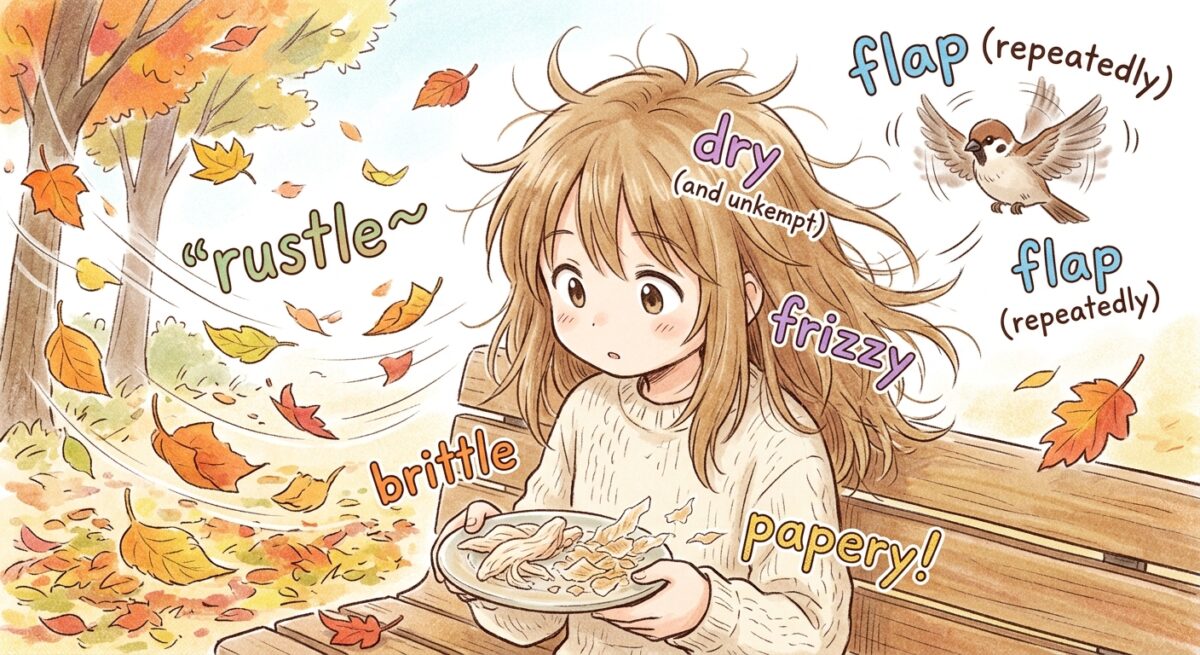
👉 The sound or action of light, dry objects flapping or rustling repeatedly, such as dry leaves, paper, or wings.
👉 The state of being dry, frizzy, unkempt, or brittle, typically referring to hair, dry paper, or thin, dry materials.
Nuance & Depth
Emphasizes a sense of dryness, lightness, and often a somewhat rough, disheveled, or brittle quality. When describing sound, it's a quick, repeated, relatively light rustling or flapping. When describing a state, it implies a lack of moisture leading to an unruly or crumbly texture.
Basabasa vs rustle, flap (repeatedly), brittle, dry (and unkempt), frizzy, papery: As an onomatopoeia (giongo and gitaigo), 'ばさばさ' vividly conveys sensory details. The repeated 'ばさ' indicates continuous or repeated action/state. The 'ば' sound gives it a slightly fuller, yet still light, impact compared to 'ぱさぱさ', often implying a degree of movement or a slightly larger scale for the sound.
Imagine This Situation
Example Sentences & Audio
(It was a windy day, and the laundry was flapping BASABASA(ばさばさ, making a flapping sound).)
(My hair is dry and frizzy BASABASA(ばさばさ, dry and frizzy), so I need a hair treatment.)
(When I opened the old book, the pages made a dry rustling sound BASABASA(ばさばさ, making a dry rustling sound).)
Summary
👉 'ばさばさ' describes the repeated rustling/flapping sound/action of light, dry objects, OR the state of being dry, frizzy, and slightly unkempt, often with an implication of lightness and potential movement.