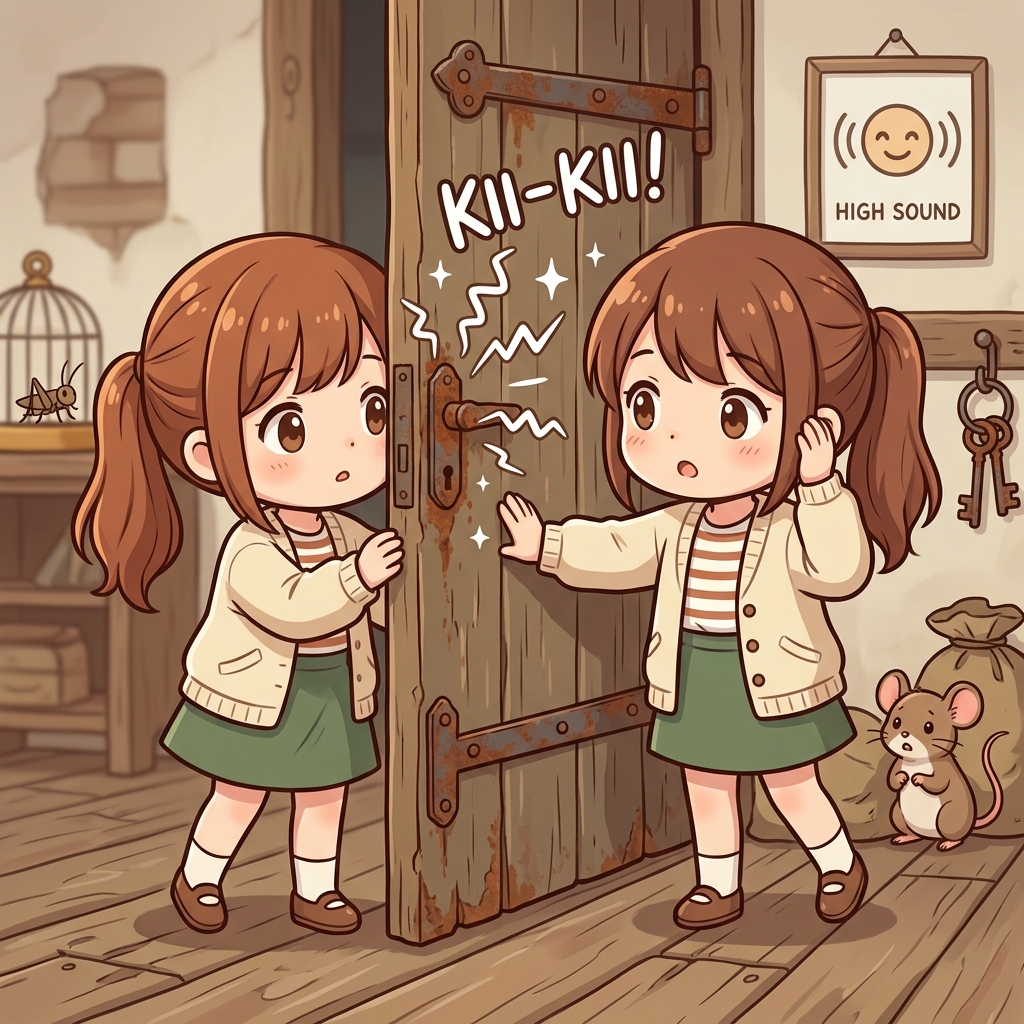
Have you ever heard a sharp, high-pitched squeak in Japanese media and wondered how to describe it naturally? Maybe it was an old wooden floor, a rusty door, a squeaky bicycle brake, or a small animal making a thin cry. In Japanese, きーきー (kii-kii) is a useful onomatopoeic expression for this kind of high, sharp, and often slightly unpleasant sound.
きーきー (kii-kii) is especially helpful when you want to describe a repeated squeaking, creaking, or shrill sound. It can be used for objects, animals, and sometimes even human voices, as long as the sound has that thin, high-pitched quality.
The Core Meaning: What Is きーきー (kii-kii)?
At its core, きーきー (kii-kii) describes a high-pitched, sharp, and often repetitive sound. It often feels a little irritating or grating to the ears, especially when the sound continues for a while.
In English, it can overlap with words such as “squeak,” “creak,” or “shriek,” depending on the context. However, the main image is always a thin, high sound. It may come from friction, a small animal’s cry, a squeaky object, or a voice that sounds sharp and piercing.
This makes きーきー (kii-kii) useful across many everyday situations. The source of the sound can change, but the sound quality stays similar: high, sharp, and often repeated.
The Scene Behind the Word: Visualizing きーきー (kii-kii)
To understand きーきー (kii-kii), it helps to imagine the sound clearly. This word is not for deep, heavy, or rumbling noises. It is for sounds that feel thin, sharp, and high in pitch.
- Creaking doors and floors: An old wooden floor or a rusty door may make a high-pitched creaking sound when it moves. This is a classic きーきー (kii-kii) situation.
- Squeaking mice: The small, sharp cries of mice can be described with きーきー (kii-kii), especially when the sound is thin and repeated.
- Squeaky brakes or wheels: A bicycle brake, cart wheel, or hinge that makes a sharp friction sound may also be described as きーきー (kii-kii).
- Shrill voices: In some contexts, a very high-pitched or piercing human voice can be described this way, especially if it sounds noisy or irritating.

When Japanese Speakers Use It
Japanese speakers use きーきー (kii-kii) when they want to describe a sound that is sharp, high, and often repetitive. It can sound slightly negative because many きーきー (kii-kii) sounds are unpleasant, but the word itself mainly describes the quality of the sound.
For example, if an old floor makes a sharp creaking sound every time someone walks, きーきー (kii-kii) fits well. If a worn bicycle brake makes a piercing squeak, this word also works naturally. If a small animal makes a thin, repeated cry, きーきー (kii-kii) may be used depending on the sound.
The key is not simply “noise.” The sound should feel high-pitched and squeaky rather than low, heavy, or booming.
Practice きーきー (kii-kii) with Audio
Play the audio and listen to how the examples sound in Japanese.
Japanese: 古い木の床が歩くたびにきーきーと音を立てた。
English: The old wooden floor creaked (kii-kii) every time I walked on it.
Japanese: 夜中にネズミがきーきーと鳴く声が聞こえて、眠れなかった。
English: I couldn't sleep because I heard mice squeaking (kii-kii) in the middle of the night.
💡 A Native-Sounding Tip
Focus on the pitch and texture of the sound. If it is high, sharp, repeated, and a little squeaky or grating, きーきー (kii-kii) may fit well. If the sound is low, heavy, or rumbling, choose a different expression.
🚨 Avoid This Common Mistake
Do not use きーきー (kii-kii) for low-pitched or powerful sounds. A dog’s deep bark, thunder, heavy machinery rumbling, or a drumbeat would not usually be described with きーきー (kii-kii). The word is mainly for thin, high-pitched sounds.
Similar Expressions: Expanding Your Vocabulary
Japanese has many sound-symbolic words, and small differences in sound can create different impressions. Here are two expressions that are close to きーきー (kii-kii), but not exactly the same.
| Onomatopoeia | Meaning |
|---|---|
| ギーギー (gii-gii) | Often used for heavier or rougher creaking and squeaking, such as an old gate, rusty hinge, or large object making a strained sound. |
| キュッキュッ (kyu-kyu) | Often describes a shorter, cleaner squeaking sound, such as rubber shoes on a polished floor or something being wiped clean. |
Frequently Asked Questions
Can きーきー (kii-kii) be used for human voices?
Yes, きーきー (kii-kii) can sometimes describe a human voice if it is very high-pitched, shrill, or squeaky. However, it can sound unflattering, so it should be used carefully when describing people.
Is きーきー (kii-kii) always negative?
Not always, but it often has a slightly unpleasant nuance because many きーきー (kii-kii) sounds are sharp or irritating. In some contexts, it simply describes a high-pitched sound without strong criticism.
Can I use きーきー (kii-kii) for music?
Usually, no. If a musical note is clear, beautiful, or pleasant, きーきー (kii-kii) would sound unnatural. It may be used only if the sound is unpleasantly sharp, squeaky, or grating.
What is the difference between きーきー (kii-kii) and ギーギー (gii-gii)?
きーきー (kii-kii) often feels higher, thinner, and sharper. ギーギー (gii-gii) often feels heavier, rougher, or more strained. For example, a small squeaky sound may be きーきー, while a heavy rusty gate may be ギーギー.
Learning きーきー (kii-kii) helps you describe high-pitched sounds in Japanese with much more precision. Whether you are talking about an old floor, a squeaky brake, a mouse, or a shrill voice, this word gives your Japanese a more vivid and natural sound.