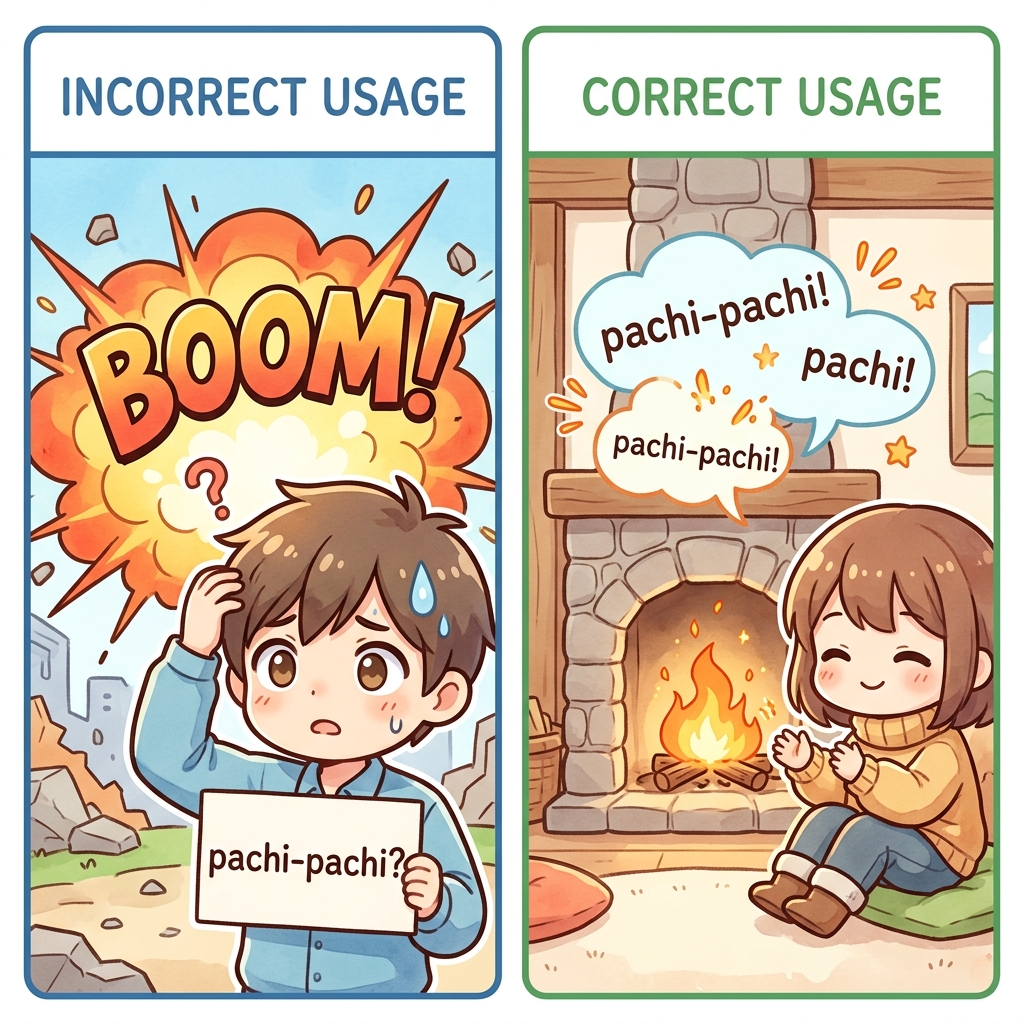
Learning Japanese onomatopoeia can be incredibly rewarding, adding vividness and nuance to your language. However, some words, like ぱちぱち (pachi-pachi), can be tricky. While it paints a picture of small, continuous sounds, misusing it can lead to awkward misunderstandings. Imagine trying to describe a loud explosion or a heavy hailstorm with ぱちぱち (pachi-pachi)—it would conflict with the word's small, light, repeated sound. This article will help you avoid common pitfalls and sound more authentic by understanding exactly when and when not to use ぱちぱち (pachi-pachi).
The Scene ぱちぱち (pachi-pachi) Creates
At its core, ぱちぱち (pachi-pachi) describes the sound or manner of small things continuously popping, hitting, or bursting. Think of it as a series of light, sharp, and often rapid sounds. It's particularly common for the sound of fire crackling, small hard objects tapping against each other, or even electrical discharges. The key here is 'small,' 'light,' and 'continuous'—qualities that are crucial for correct usage.
What Kind of Movement It Suggests
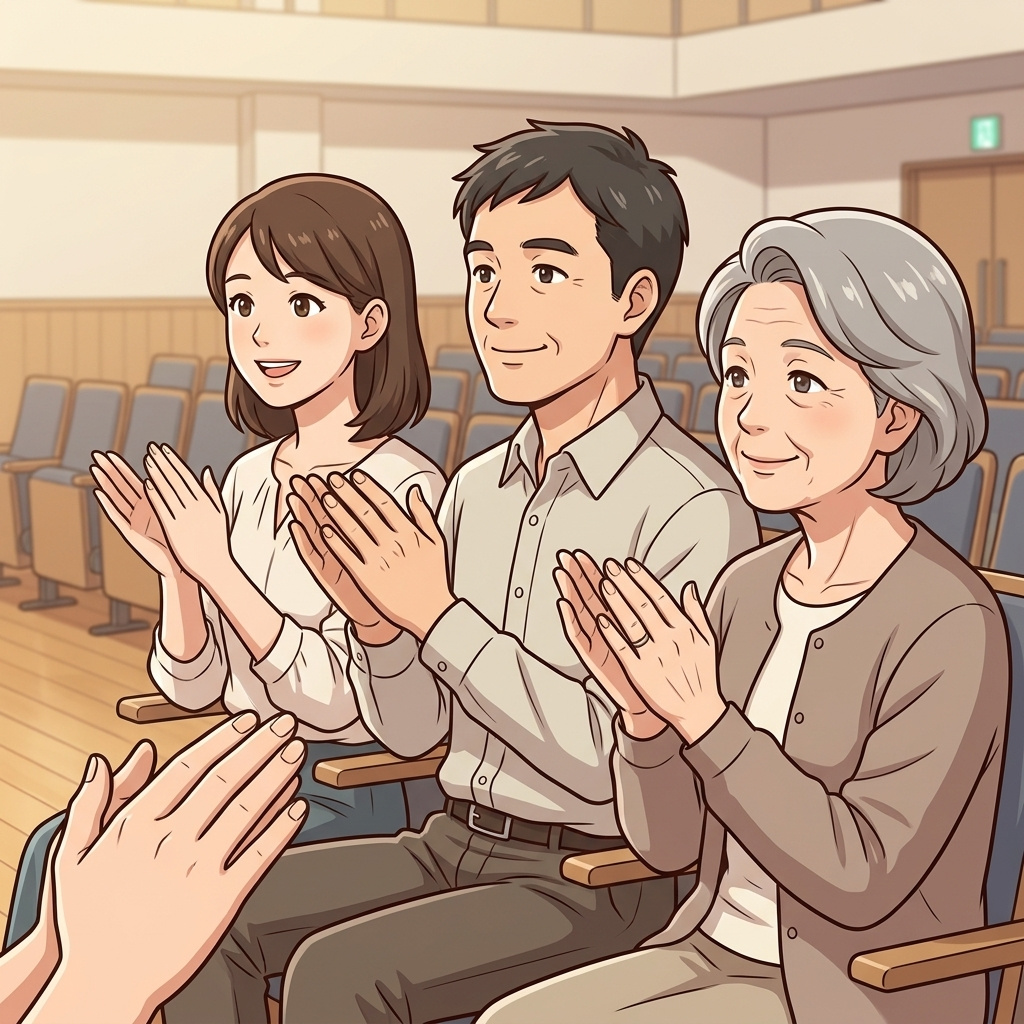
ぱちぱち (pachi-pachi) suggests a rapid, repetitive action involving small impacts or releases of energy. It's not about a single, forceful hit, but rather a succession of gentle yet distinct events. For instance, when you clap your hands lightly and repeatedly, that's ぱちぱち (pachi-pachi). It evokes a sense of delicate energy, often with a visual component of tiny, quick movements.
ぱちぱち (pachi-pachi) in Nature and Everyday Life
This onomatopoeia is frequently used to describe natural phenomena and everyday occurrences where small objects create a continuous, light sound:
- Fire: The gentle crackling of a small fire in a fireplace or campfire.
- Light, Hard Objects: Small, hard things tapping against each other, such as a folding fan being tapped or go stones being placed on a board.
- Electrical Sounds: The faint, continuous crackle of static electricity or a small electrical discharge.
- Clapping: The sound of applause, especially light, continuous clapping.
Understanding these contexts is vital for using ぱちぱち (pachi-pachi) naturally. It's about capturing the essence of these specific, subtle sounds.
Avoiding Common ぱちぱち (pachi-pachi) Mistakes
Many learners struggle with the precise scope of ぱちぱち (pachi-pachi), often trying to apply it to situations where it simply doesn't fit. A common mistake is using it for loud, singular, or heavy impacts. For example, describing a car backfiring as ぱちぱち (pachi-pachi) would suggest the wrong scale and rhythm. Similarly, a heavy hailstorm or a loud explosion would require different onomatopoeia entirely.
Common Pitfall: Overextending ぱちぱち (pachi-pachi)
Do NOT use ぱちぱち (pachi-pachi) for:
- Loud, singular bangs (e.g., a gun firing, a balloon popping loudly).
- Heavy, impactful sounds (e.g., thunder, a car crash, large objects falling).
- Continuous, but heavy or forceful actions (e.g., a jackhammer, heavy machinery).
Remember, it's about small, light, and continuous sounds.
The success case for ぱちぱち (pachi-pachi) is describing a small fire crackling in a fireplace, which perfectly aligns with its meaning. The failure case, like describing a car backfiring, highlights the importance of understanding its limitations.
The Small, Light, Repeated-Sound Test
Remember that ぱちぱち (pachi-pachi) is for small, light, and continuous popping or tapping sounds. Don't use it for single, loud bangs (like a gun) or heavy, impactful sounds (like large objects hitting the ground). Always think 'delicate and repetitive' when considering ぱちぱち (pachi-pachi).
By focusing on these precise contexts and avoiding the common pitfalls, you'll be able to use ぱちぱち (pachi-pachi) with confidence, making your Japanese sound much more natural and nuanced. Mastering these subtle distinctions is a key step in truly understanding Japanese onomatopoeia.
Try Saying ぱちぱち (pachi-pachi) Naturally
Play the audio and listen to how the examples sound in Japanese.
Japanese: 暖炉の薪がぱちぱちと音を立てて燃えている。
English: The firewood in the fireplace is crackling and burning.
Japanese: 発表が終わると、会場からぱちぱちと拍手が起こった。
English: When the presentation ended, light applause came from the audience.
Frequently Asked Questions
What's the main difference between ぱちぱち (pachi-pachi) and other popping sounds?
The main difference lies in the scale and continuity. ぱちぱち (pachi-pachi) specifically refers to small, light, and continuous popping or tapping sounds, like a crackling fire or clapping. Other popping sounds might describe single, louder bursts (like ぱん (pan) for a balloon pop) or heavier impacts.
Can ぱちぱち (pachi-pachi) be used to describe human actions?
Yes, ぱちぱち (pachi-pachi) is commonly used to describe human actions, most notably the sound of applause or clapping. When people clap their hands lightly and repeatedly, the sound is often described as ぱちぱち (pachi-pachi).