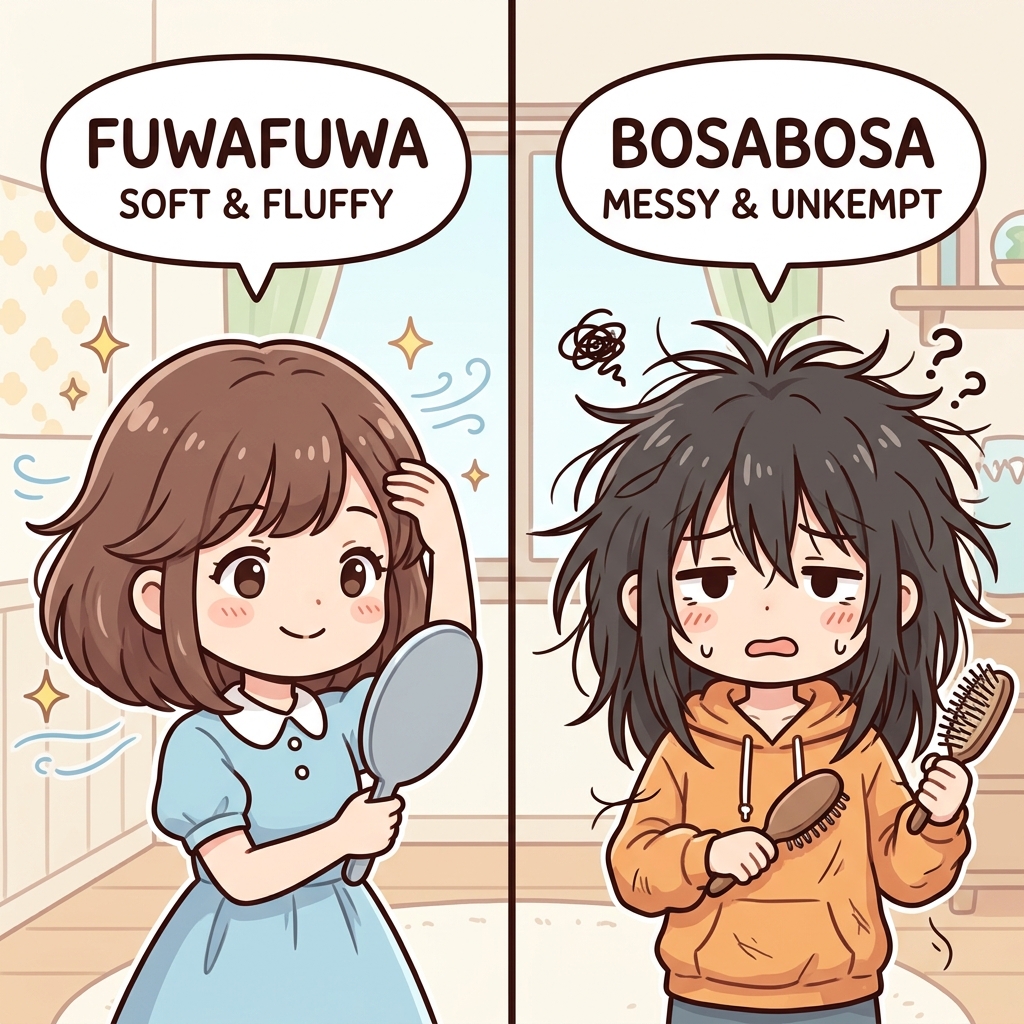
Imagine trying to compliment someone's soft hair but accidentally calling it 'messy,' or struggling to describe your own bad hair day. Mastering the subtle differences between ぼさぼさ (bosabosa) and fuwafuwa is crucial to accurately describe hair textures in Japanese, avoiding common misunderstandings and sounding more natural. These two common onomatopoeia might sound similar in their application to hair, but their connotations are miles apart. This guide will help you navigate these tricky situations.
Two Similar Sounds, Different Impressions
Japanese onomatopoeia, or giongo and gitaigo, are vivid words that describe sounds, states, or manners. For foreigners learning Japanese, distinguishing between seemingly similar expressions is key to native-sounding communication. Today, we're diving into ぼさぼさ (bosabosa) and fuwafuwa, two terms often encountered when talking about hair or fur. While both relate to texture and appearance, ぼさぼさ (bosabosa) paints a picture of disarray, whereas fuwafuwa evokes a sense of pleasant lightness and softness.
The Scene Behind Each Expression
ぼさぼさ (bosabosa): The Unkempt Look
When you hear ぼさぼさ (bosabosa), immediately think 'messy,' 'unkempt,' or 'disheveled.' It vividly describes hair or fur that is tangled, matted, or simply not well-groomed. This onomatopoeia paints a picture of a lack of order, often implying that the hair hasn't been brushed, styled, or properly cared for. It's the kind of hair you might have after a long sleep, a strenuous workout, or if you've been caught in a strong wind without protection. The visual is one of strands going every which way, lacking cohesion and neatness. It almost always carries a negative or at least undesirable connotation, suggesting a need for tidying or grooming. It's the opposite of 'well-groomed' and often implies a state of neglect.
fuwafuwa: The Fluffy, Soft Touch
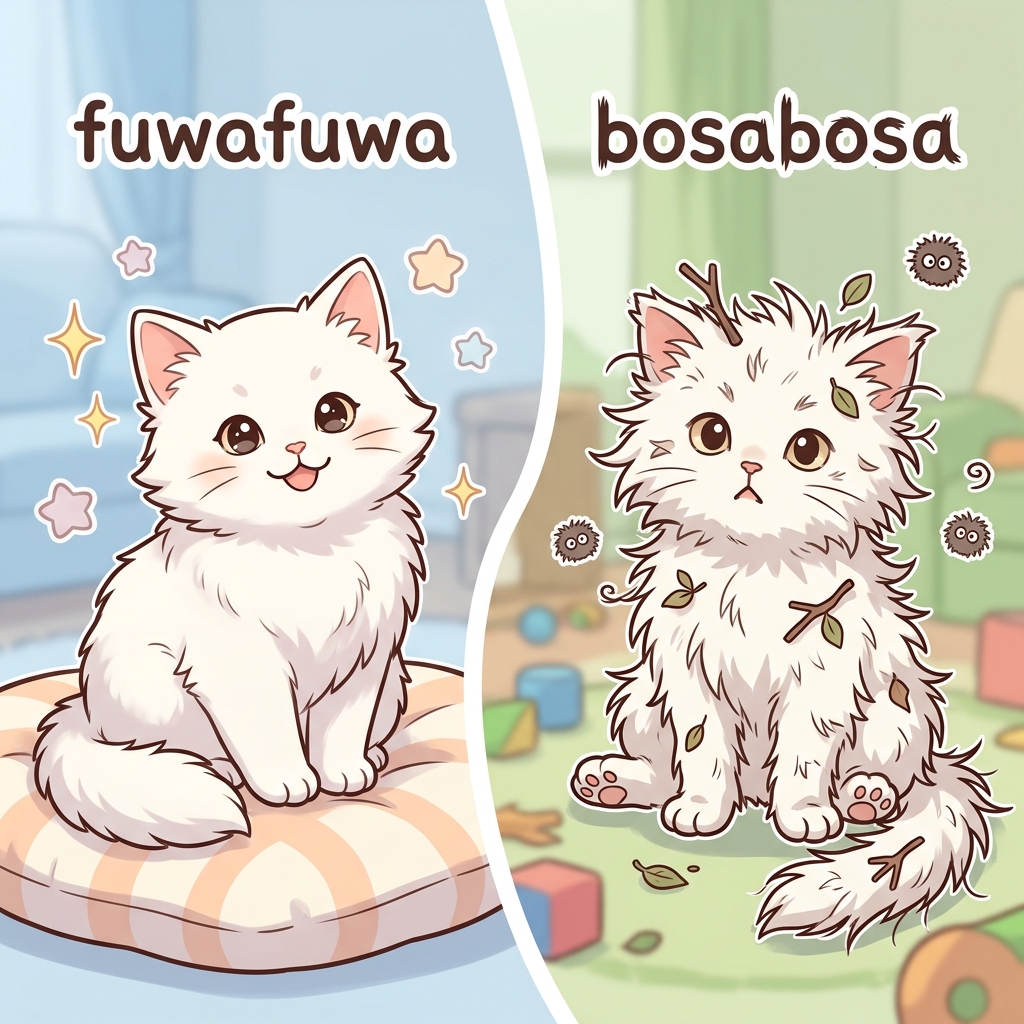
In stark contrast, fuwafuwa describes something light, airy, and wonderfully soft to the touch. It's the delightful sensation of a fluffy cloud drifting across the sky, a soft, warm blanket on a cold evening, or indeed, beautifully voluminous and well-cared-for hair. When applied to hair or fur, fuwafuwa suggests a pleasant, gentle texture that is often highly desirable. It implies a certain lightness, a pleasant bounce, and a comforting softness, far removed from the tangled mess of ぼさぼさ (bosabosa). Think of a baby's delicate, fine hair, the soft fur of a pampered pet, or even the light texture of freshly baked bread. This term almost universally evokes positive feelings of comfort, warmth, and tenderness.
How Japanese Speakers Choose Between Them
The choice between ぼさぼさ (bosabosa) and fuwafuwa hinges entirely on the desired impression and the underlying state of the hair or fur. If you want to convey that someone's hair is messy, unkempt, or desperately needs tidying, ぼさぼさ (bosabosa) is the precise word to use. For instance, if you've just rolled out of bed with a severe case of bedhead, your hair is undoubtedly ぼさぼさ (bosabosa). Similarly, if a pet's fur is matted and neglected, it would be described as ぼさぼさ (bosabosa). This term highlights a state of disarray and often implies a need for correction.
On the other hand, if you're describing something soft, light, and pleasantly fluffy, fuwafuwa is the unequivocally appropriate choice. A child's soft, fine hair, a freshly laundered, fluffy towel, or even a light, airy cake can all be beautifully described as fuwafuwa. It carries a distinctly positive or at least neutral and pleasant connotation, emphasizing desirable qualities like softness, lightness, and a pleasing texture. Understanding this distinction is vital for accurate and polite communication in Japanese.
A Compliment or an Unkempt Look?
While fuwafuwa often implies a pleasant, soft fluffiness, ぼさぼさ (bosabosa) almost always carries a negative connotation of being unkempt. Use fuwafuwa for a desired soft look, and ぼさぼさ (bosabosa) for truly messy, disheveled hair that needs attention.
Small Nuance, Big Difference
The difference between these two terms is not just semantic; it's about the emotional impact and the social context. Using the wrong word can lead to misunderstandings or even unintended offense. Imagine trying to compliment a child's soft, fine hair by saying it's ぼさぼさ (bosabosa) – you'd be implying it's messy, not soft!
Common Mistake to Avoid
A common mistake is using ぼさぼさ (bosabosa) to describe a child's soft, fluffy hair, causing confusion or offense. Remember, ぼさぼさ (bosabosa) implies a negative state of being unkempt, while fuwafuwa describes a pleasant softness.
Quick Practice with Real Context
Compare the Sound and Feeling
Play the audio and listen to how the examples sound in Japanese.
Japanese: 朝起きたら髪がぼさぼさになっていたので、急いで整えた。
English: When I woke up in the morning, my hair was messy, so I quickly tidied it.
Japanese: 赤ちゃんのかわいい髪の毛がふんわりとふわふわしている。
English: The baby's cute hair is soft and fluffy.
Related Expressions
| Japanese | Romaji | Meaning |
|---|---|---|
| ごわごわ | gowagowa | Stiff, coarse, rough (e.g., hair, fabric) |
| さらさら | sarasara | Smooth, silky, rustling (e.g., hair, sand) |
| ふわふわ | fuwafuwa | Fluffy, soft, light |
| ぐちゃぐちゃ | guchagucha | Messy, soggy, muddled (broader than hair) |
Frequently Asked Questions
Can ぼさぼさ (bosabosa) be used for things other than hair?
While most commonly associated with hair or fur, ぼさぼさ (bosabosa) can sometimes describe other things that are disheveled or untidy, like a messy garden with overgrown weeds, though this usage is less common than for hair. Its core meaning remains 'unkempt' or 'disordered.'
Is fuwafuwa always positive?
fuwafuwa generally carries a positive or neutral connotation, describing a pleasant softness, lightness, or fluffiness. It's rarely used in a negative sense, unless perhaps in an ironic context to describe something that *should* be firm but is unexpectedly soft and unstable.