
Have you ever found yourself in a new situation, feeling a bit lost, clumsy, or unsure of what to do next? Perhaps you were trying to assemble IKEA furniture, navigate a complex new software, or simply follow a recipe in a foreign language. In Japanese, there's a perfect onomatopoeia to describe these moments: まごまご (mago-mago).
Learning まごまご (mago-mago) isn't just about adding another word to your vocabulary; it's about unlocking a natural, relatable way to describe mild confusion, hesitation, and even endearing clumsiness in everyday Japanese conversations. It allows you to express those 'deer in headlights' moments with a touch of authentic nuance.
The Core Meaning of まごまご (mago-mago)
The Japanese onomatopoeia まごまご (mago-mago) describes the state of being at a loss, fumbling, or taking time because one doesn't know what to do. It captures movements and attitudes accompanied by impatience, bewilderment, or awkwardness in unfamiliar situations. While it signifies confusion, it can also carry a slightly humorous or endearing nuance, especially when describing someone's struggle.
Think of it as the sound or feeling of someone trying their best but just not quite getting it right, often involving hesitant or inefficient actions.
The Scene Behind the Word
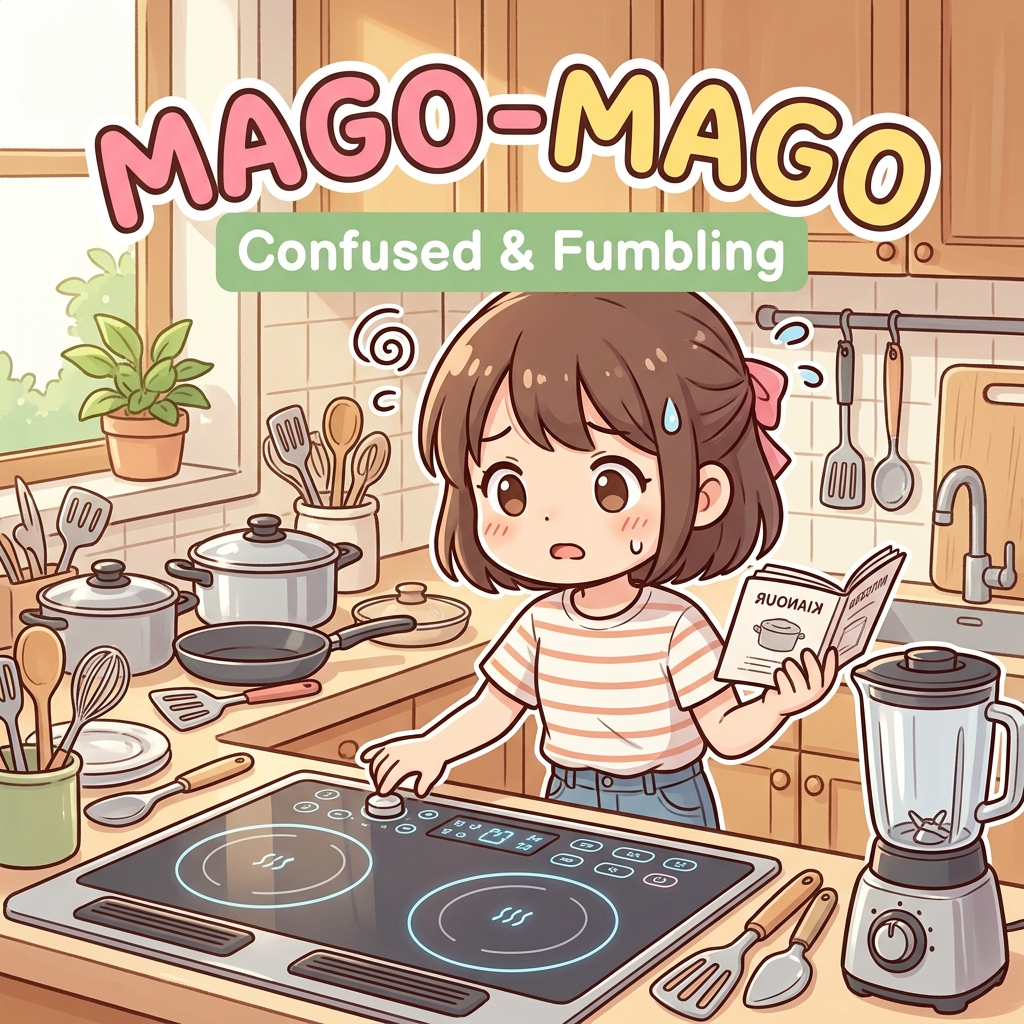
まごまご (mago-mago) paints a picture of someone visually struggling. Imagine a new employee trying to operate an unfamiliar office machine, pressing buttons randomly, or a student attempting to follow complex cooking instructions, pausing, re-reading, and making slow, uncertain movements. These are classic まごまご (mago-mago) scenarios.
It's not about deep, existential confusion, but rather a practical, momentary bewilderment in the face of a task or environment. It's the physical manifestation of 'I don't know what to do.'
When Japanese Speakers Use It
Japanese speakers use まごまご (mago-mago) in a variety of everyday situations, often to describe:
- Struggling with new technology: An elderly person trying to use a smartphone for the first time might be described as まごまご (mago-mago)している.
- Navigating unfamiliar surroundings: A tourist looking at a map, turning it upside down, and looking around confusedly is まごまご (mago-mago)している.
- Performing a new task at work: A new hire trying to figure out a complex filing system might まごまご (mago-mago)しながら (while fumbling) do their work.
- Following complex instructions: Someone trying to assemble furniture without clear directions might まごまご (mago-mago)する (fumble).
It's commonly used with verbs like する (suru - to do), している (shiteiru - doing), or with the particle と (to) to describe the manner of an action.
Practice まごまご (mago-mago) with Audio
Play the audio and listen to how the examples sound in Japanese.
Japanese: 新しいコピー機の使い方が分からなくて、彼はまごまごしていた。
English: He was fumbling around, at a loss as to how to use the new copier.
Japanese: 初めての料理で、レシピを見ながらまごまごしながら作りました。
English: It was my first time cooking, so I made it while fumbling around, looking at the recipe.
A Native-Sounding Tip: When using まごまご (mago-mago) to describe yourself, for example, 「まごまごしちゃってすみません」 (mago-mago shichatte sumimasen - 'Sorry for fumbling around'), it often carries a slightly self-deprecating but endearing nuance. It indicates you're trying your best despite being confused, and can actually make you seem more approachable and human to native speakers.
Common Pitfall: Avoid using まごまご (mago-mago) for serious, deep-seated confusion or mental distress. It's primarily for temporary, task-oriented bewilderment or physical clumsiness. For deeper confusion or anxiety, other expressions like 困惑 (konwaku - perplexity) or 途方に暮れる (tohou ni kureru - to be at a loss) would be more appropriate.
Similar Expressions
While まごまご (mago-mago) has its unique flavor, here are a few related expressions:
| Expression | Nuance |
|---|---|
| もたもた (mota-mota) | Slow, inefficient, dawdling. Often implies a lack of speed or skill. |
| うろうろ (uro-uro) | Wandering aimlessly, loitering. Focuses on movement without purpose. |
| とまどう (tomadou) | To be perplexed, bewildered. A more general verb for feeling lost or confused, without the physical clumsiness. |
Understanding まごまご (mago-mago) allows you to add a layer of vividness and authenticity to your Japanese. It's a small but powerful word that truly captures those universally relatable moments of being a little lost, a little clumsy, and utterly human.
Frequently Asked Questions
Can まごまご (mago-mago) be used for animals?
まごまご (mago-mago) is mainly used for people who are confused, hesitant, or unsure what to do. For animals, it can sound natural when you are describing a pet in a slightly human-like or playful way, such as a puppy looking unsure where to go, but it is not the core use.
Is まごまご (mago-mago) always negative?
While it describes confusion or clumsiness, まごまご (mago-mago) isn't always strictly negative. It often carries a mild, sometimes even endearing, nuance, especially when describing someone's innocent struggle or when used self-deprecatingly. It's more about a temporary state of being flustered rather than a serious flaw.