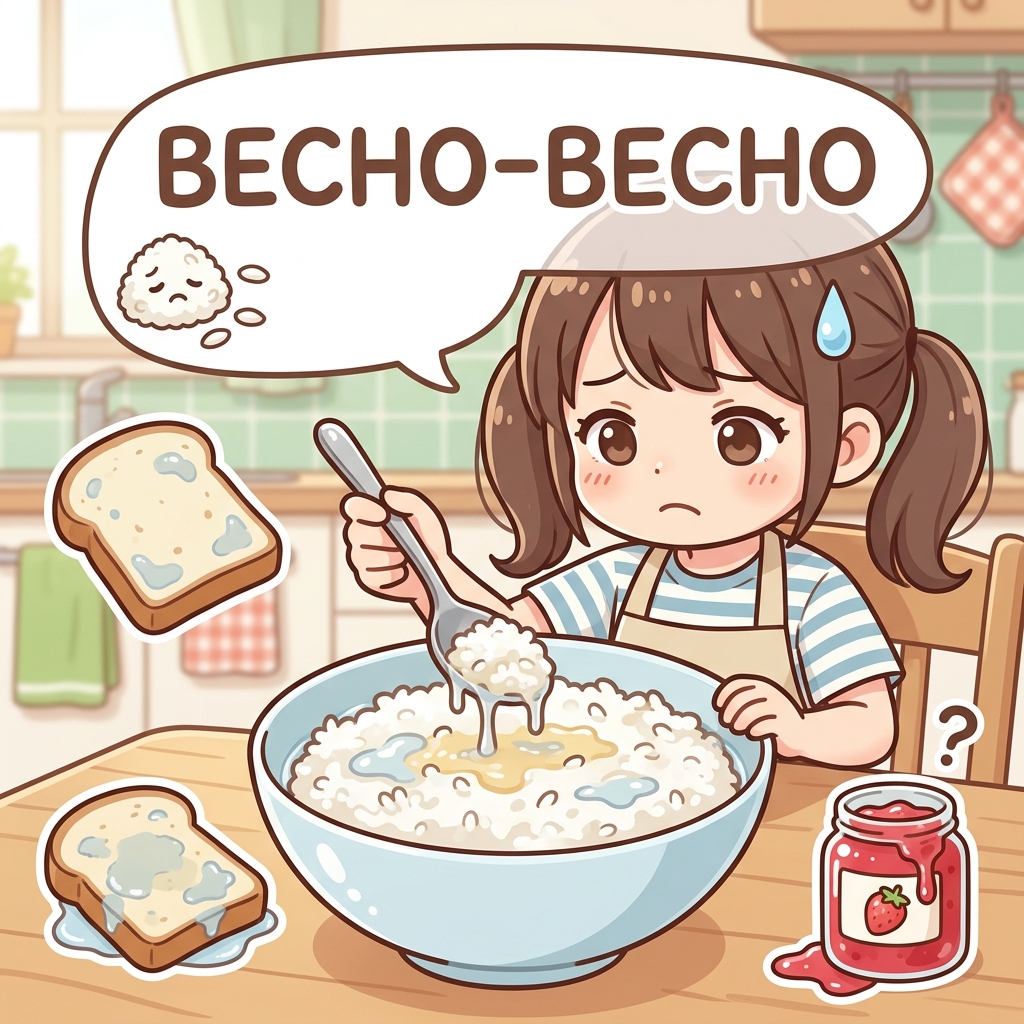
Imagine trying to describe poorly cooked rice to a Japanese friend. You might know words like “wet” or “soft,” but what if the texture is more specific: too watery, sticky, mushy, and unpleasant? This is where the Japanese onomatopoeia べちょべちょ (becho-becho) becomes useful.
べちょべちょ (becho-becho) describes something that is unpleasantly wet, soggy, mushy, or sticky because it contains too much moisture. It is often used for food, but it can also describe clothes, towels, paper, mud, floors, or other things that are wet and messy in an uncomfortable way.
The Sound Behind the Food
べちょべちょ (becho-becho) is an onomatopoeic expression that describes a wet, sticky, mushy, or soggy state. In food contexts, it often means that the texture has gone wrong because there is too much moisture. Rice may become mushy, bread may become soggy, or vegetables may lose their firmness and become watery.
It is not usually a pleasant word. When someone says food is べちょべちょ, they usually mean the food has lost its ideal texture. It sounds disappointed, critical, or at least negative.
What You Can Almost Feel
べちょべちょ (becho-becho) is not only about sound. It strongly suggests touch and texture. Think of wet bread, overcooked rice, muddy shoes, or a towel that is soaked and unpleasant to touch. The word gives the feeling of moisture that is too much, too sticky, or too messy.
For example, imagine ordering omurice, but the rice is watery and the egg has made everything mushy. If you only say “wet,” the nuance is too weak. べちょべちょ tells the listener that the texture is unpleasantly soggy and sticky.
Where This Appears in Japanese Cooking
べちょべちょ (becho-becho) is often heard when food has become unpleasantly moist or sticky:
- Rice: One common use is for rice cooked with too much water, resulting in べちょべちょなご飯 (becho-becho na gohan), meaning mushy or watery rice.
- Bread & Pastries: Bread or pastries can become べちょべちょ if they absorb too much moisture and lose their crisp or fluffy texture.
- Sauces & Jams: A sauce, jam, or filling that fails to set and becomes overly loose or sticky may be described this way.
- Cooked Vegetables: Overcooked vegetables that become watery, soft, and unpleasant can also feel べちょべちょ.
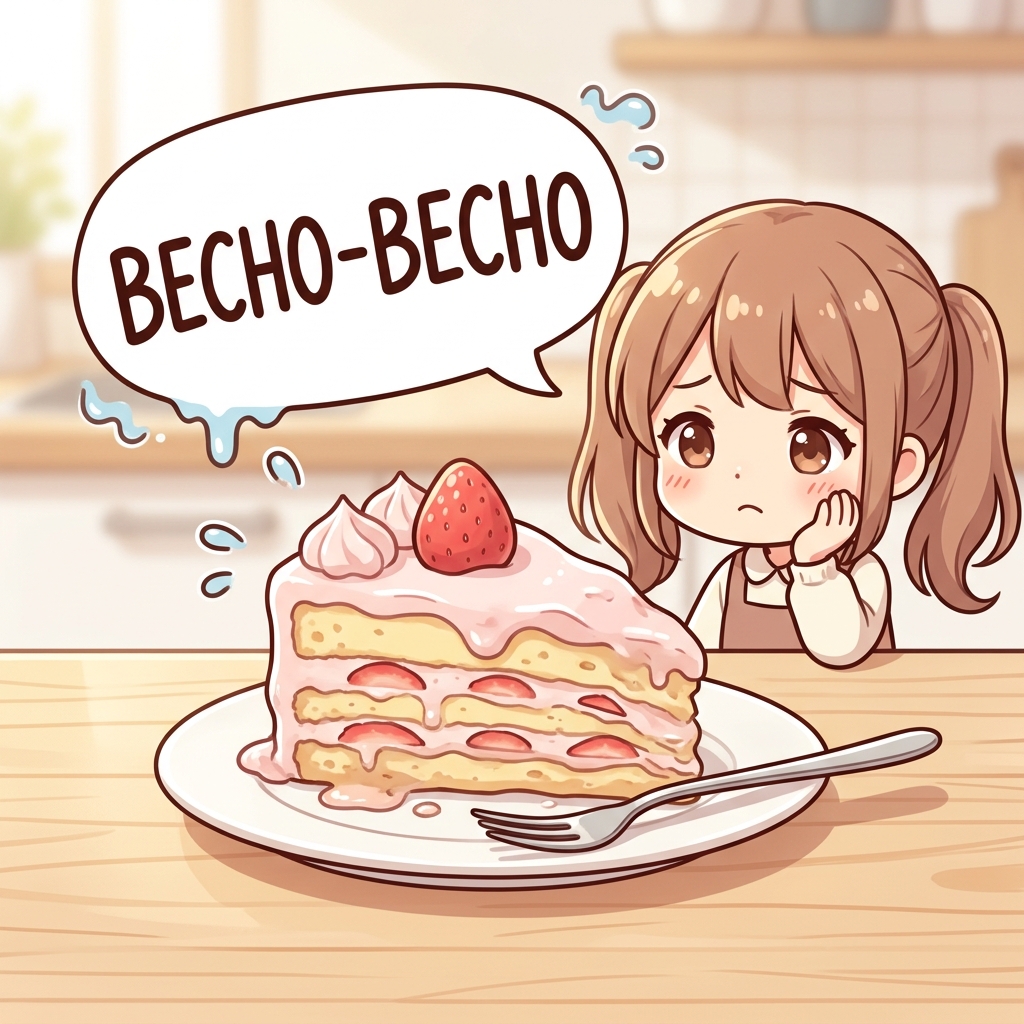
べちょべちょ (becho-becho) usually has a negative feeling. It suggests that something is too wet, soggy, sticky, or mushy in a way that feels unpleasant. It is common for food, but it can also describe non-food items when they are uncomfortably wet or messy.
Why It Feels So Vivid
Using べちょべちょ (becho-becho) lets you describe a very specific kind of unpleasant texture. It is stronger and more sensory than simply saying “wet” or “soft.” The listener can imagine something soggy, sticky, and disappointing.
This is especially useful when talking about food. For example, “the rice was wet” sounds unclear, but ご飯がべちょべちょだった clearly suggests that the rice was too watery or mushy and not enjoyable.
Do not use べちょべちょ for simple neutral wetness. If something is just wet, 濡れている (nurete iru) is usually enough. Use べちょべちょ when the wetness feels excessive, sticky, soggy, messy, or unpleasant. A towel can be べちょべちょ if it is soaked and unpleasant, but not if it is simply damp.
A Tasty Usage Tip
To use べちょべちょ (becho-becho), you can combine it with な before a noun, as in べちょべちょなご飯 (becho-becho na gohan - mushy rice). You can also use it with になる (ni naru - to become), as in ご飯がべちょべちょになった (gohan ga becho-becho ni natta - the rice became mushy).
It is a useful word when you want to describe food that is too wet, soggy, sticky, or mushy. Just remember that the nuance is usually negative.
Try Saying べちょべちょ (becho-becho) Naturally
Play the audio and listen to how the examples sound in Japanese.
Japanese: このご飯、水加減を間違えたのか、べちょべちょになっちゃった。
English: I must have used the wrong amount of water; this rice turned out mushy.
Japanese: 雨の日に買ったパンが湿気でべちょべちょになっていて、美味しくなかった。
English: The bread I bought on a rainy day got soggy from the humidity and wasn’t tasty.
Related Expressions
| Expression | Meaning |
|---|---|
| べたべた (beta-beta) | Sticky, often for hands, surfaces, or food that leaves a sticky residue. |
| ぐちゃぐちゃ (gucha-gucha) | Messy, mushy, mixed up, or jumbled. Broader than べちょべちょ. |
| ふにゃふにゃ (funya-funya) | Soft, limp, or flimsy. Less focused on wetness or stickiness. |
Frequently Asked Questions
Is べちょべちょ (becho-becho) always negative?
It is usually negative. べちょべちょ (becho-becho) describes a state where something is too wet, soggy, sticky, or mushy. In food contexts, it often suggests that the texture has become unpleasant. In non-food contexts, it can describe something soaked or messy in an uncomfortable way.
Can べちょべちょ (becho-becho) be used for non-food items?
Yes. Although it is very useful for food textures, べちょべちょ can also describe non-food items that are unpleasantly wet or sticky. For example, clothes, towels, floors, paper, shoes, or mud can be べちょべちょ if they are soaked, soggy, sticky, or messy. The key is that the wetness feels excessive or unpleasant, not just ordinary wetness.