What Does “Ehehe (えへへ)” Mean?
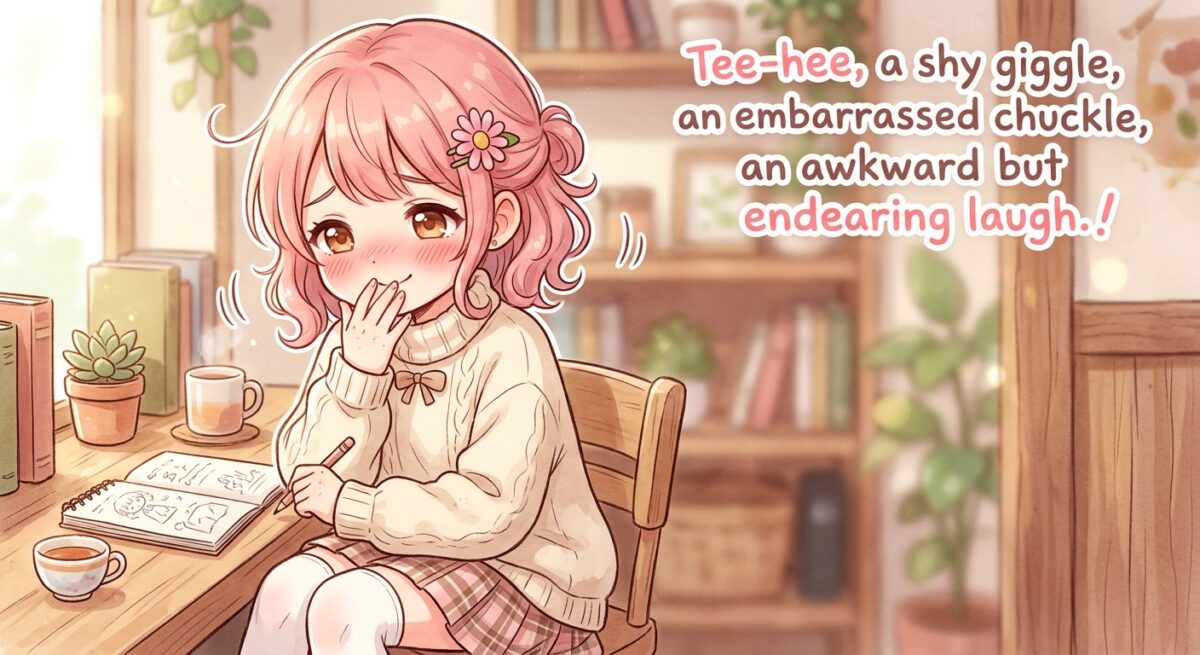
👉 A soft, slightly embarrassed, or shy laugh/giggle.
👉 An endearing or modest chuckle, often used to acknowledge praise or a minor, harmless mistake without arrogance.
Nuance & Depth
えへへ (ehehe) conveys a gentle, often self-conscious, and unthreatening form of laughter. It suggests a person who might be a little flustered, embarrassed by attention, or trying to be humble. It lacks malice, deep amusement, or boisterousness, and instead implies a soft, perhaps even 'cute' awkwardness or modesty. The 'e' sound gives it a particularly open and tender quality.
Ehehe vs Tee-hee, a shy giggle, an embarrassed chuckle, an awkward but endearing laugh.: The repetition of 'えへ' (ehe) creates a light, airy, and gentle sound. The initial 'え' (e) sound is open and soft, immediately setting a non-aggressive and mild tone. The 'へ' (he) adds a soft exhalation, making the entire expression feel slightly breathless or demure. Its structure perfectly encapsulates a light, unforced reaction.
Imagine This Situation
Example Sentences & Audio
("Wow, you drew this picture? It's really good!" "EHEHE(えへへ, shy laugh), no, not really.")
(When slightly tripping in a store, "Oh, excuse me... EHEHE(えへへ, embarrassed chuckle).")
("Today's presentation was excellent!" "EHEHE(えへへ, modest giggle), thank you very much.")
Summary
👉 えへへ is a soft, shy, or slightly embarrassed giggle, conveying humility or modest awkwardness rather than strong amusement or humor.