What Does “Kinkin (きんきん)” Mean?
👉 A high-pitched, metallic, or ringing sound, often sharp and clear (e.g., of metal, glass).
👉 Extremely cold, often to a chilling, biting, or invigorating degree (especially for liquids, food, or air).
Nuance & Depth
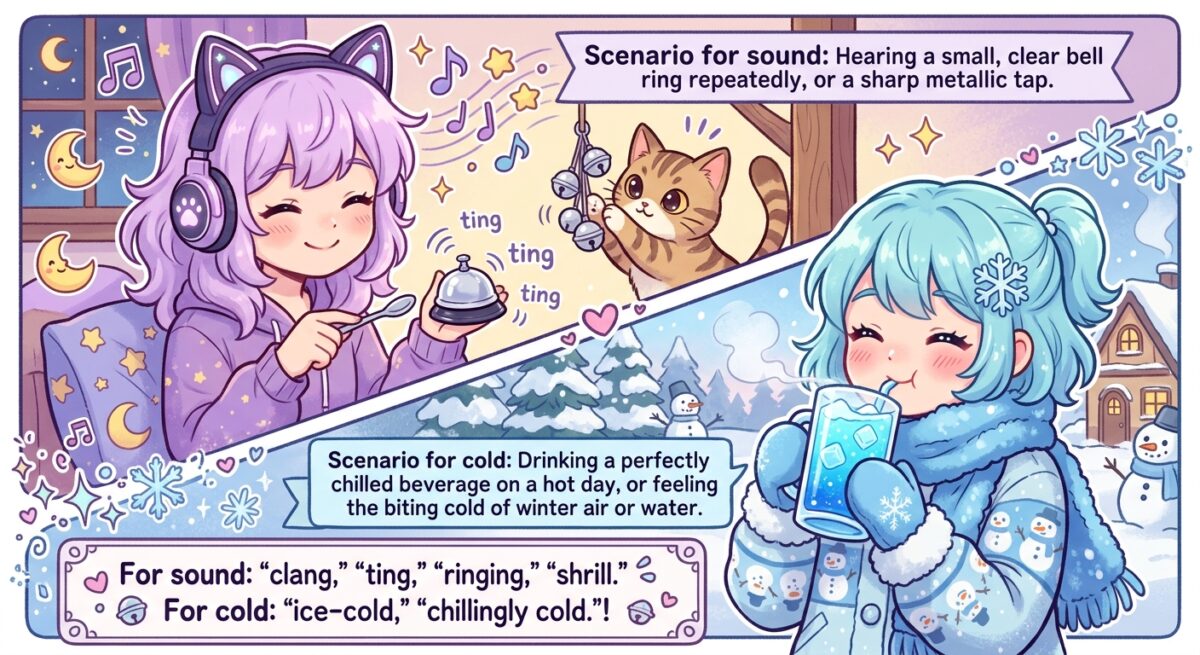
For sound, 'きんきん' emphasizes a piercing, high-frequency, and sometimes repetitive metallic or glass-like sound, often sharp and clear. For coldness, it conveys an intense, sharp, and invigorating (or sometimes unpleasantly biting) coldness that affects the senses directly, akin to the sharpness of the sound.
Kinkin vs For sound: 'clang,' 'ting,' 'ringing,' 'shrill.' For cold: 'ice-cold,' 'chilling,' 'bitingly cold.': きんきん (kinkin) is a reduplicative mimetic word (giongo/gitaigo). The repetition of 'kin' intensifies the sensation or sound. The 'kin' sound itself often carries connotations of metallic objects (金 - metal/gold) or sharpness in Japanese phonology, which is reflected in both its auditory and temperature-related meanings.
Imagine This Situation
Example Sentences & Audio
(On a hot day, ice-cold (KINKIN, extremely cold) beer is the best.)
(The old grandfather clock chimed sharply (KINKIN, high-pitched metallic sound) to announce midnight.)
(On winter mornings, the tap water is bitingly (KINKIN, extremely cold) cold.)
Summary
👉 'きんきん' describes either a high-pitched, metallic, ringing sound or an extremely, chillingly cold sensation. Its core characteristic is a sharp, intense quality in both instances.