You finish a snack while sightseeing and cannot see a trash bin. The practical answer in Japan is usually to keep the item with you until you reach a facility that accepts it or return to your accommodation. You do not need to memorize every municipal category for a short trip, but you do need to use each bin only for the items shown.
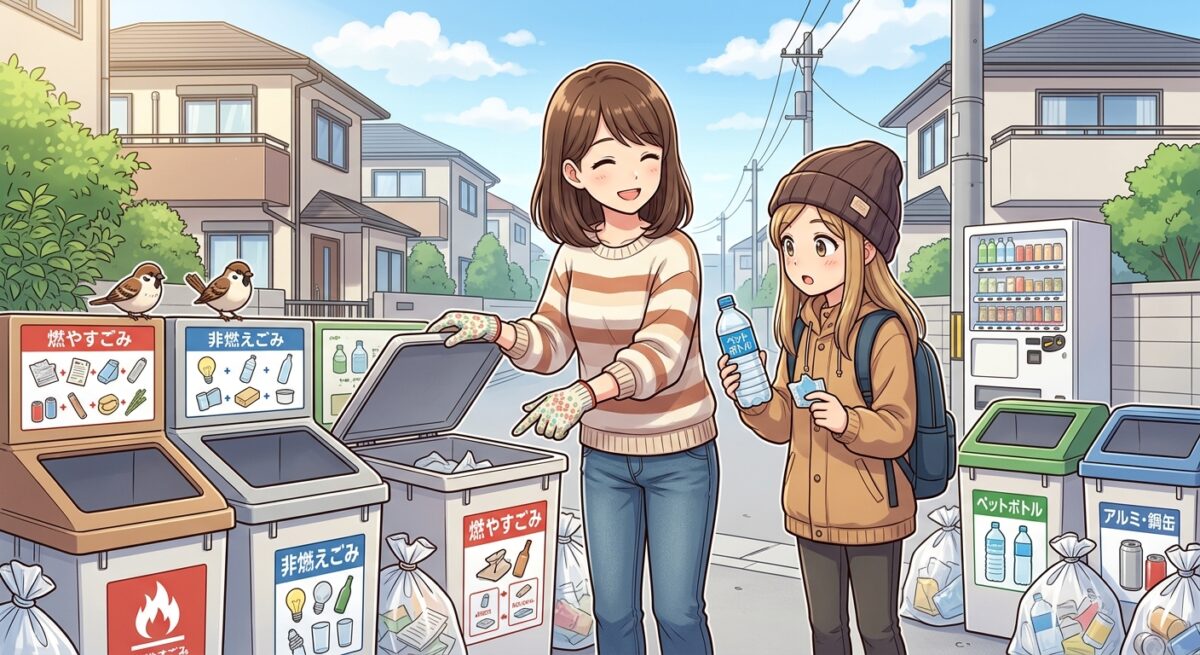
If There Is No Bin: Use This Order
- Close or wrap the item so it will not leak.
- Keep it in a small personal trash bag.
- Use a bin only when its label matches the item.
- If no suitable bin appears, take it to your hotel or accommodation.
- Ask staff before handing over liquids, batteries, broken items, or large packaging.
JNTO’s traveler guidance specifically recommends carrying a small trash bag because public bins can be limited. It also advises taking trash with you when bins are unavailable rather than littering.
Why “A Bin” Is Not Always the Right Bin
Bins in stations, shops, attractions, and event venues are managed for specific waste streams. Openings may be marked for PET bottles, cans, glass bottles, paper cups, burnable waste, or another facility category. Use the label and item illustration; do not rely only on color because colors and layouts are not nationally standardized.
Stations and Trains
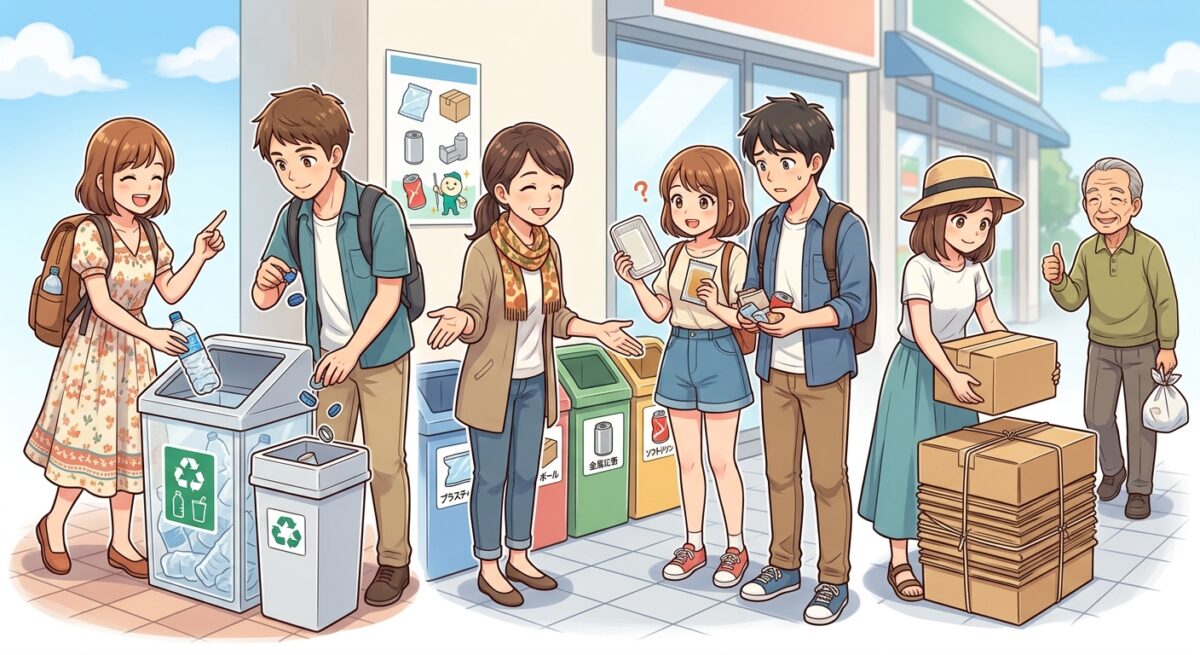
Some stations have bins inside or near ticketed areas, but availability and accepted items vary by operator and location. A platform recycling opening for bottles and cans is not a place for food containers or hotel waste. On trains, use a bin only if the car or service provides one and the label matches your item.
Do not leave a bag under a seat, on a platform, or beside a full bin. Carry it onward. If you have a leaking item, ask station staff rather than placing it in an unrelated opening.
Convenience Stores
Some convenience stores provide customer bins and some do not. If bins are available, follow the store’s labels and use them for waste associated with normal customer use. Do not bring a bag of hotel, Airbnb, or household waste to a store.
If you eat in a store’s seating area, the branch may have a cup drain or separate openings. Store layout and policy take priority over general advice.
Vending Machines: The Box Is for Drink Containers
The box beside a vending machine is a recycling box for empty beverage containers. The Japan Soft Drink Association identifies PET bottles, cans, and glass bottles as accepted items and says that food containers, batteries, cigarettes, and other general waste should not be inserted. Finish the drink first; liquid left inside also interferes with collection and recycling.
Do not place coffee-shop cups, bento boxes, tissues, umbrellas, or mixed waste into a vending-machine box merely because it is the nearest opening.
Streets, Parks, Temples, and Tourist Sites
A clean public space is not evidence that a nearby residential collection point is available to visitors. Do not add your bag to bags on a street corner. At parks, temples, museums, theme parks, and festivals, follow the venue’s signs. Temporary event bins may use categories that differ from household collection.
If a venue asks visitors to take waste home, keep it with you. If an item was bought at a food stall, ask the stall or event staff whether there is a designated return point; acceptance depends on that event’s operation.
Restaurants and Food Courts
Food waste, reusable trays, dishes, and leftover drinks need the venue’s return system, not a street-bin rule. Our separate restaurant and food-court trash guide explains how to decide whether to leave a table, return a tray, or use a liquid drain.
Hotels and Other Accommodation
At a hotel, use the room or lobby bins and ask the front desk about unusual items. A hotel may sort ordinary guest waste behind the scenes, so do not copy residential rules from outside the building.
For an Airbnb, guesthouse, or short-term apartment, follow the host and building instructions; see our guide to Airbnb and short-term rental trash rules. If you have moved to Japan and are responsible for municipal collection, use the first-week trash setup for new residents.
Labels Worth Recognizing
| Label | Meaning | Traveler action |
|---|---|---|
| 燃えるごみ | burnable waste | Use only if the facility shows your item as accepted. |
| 燃えないごみ | non-burnable waste | Do not assume this accepts every unusual item. |
| ペットボトル | PET bottles | Empty the bottle and follow cap/label instructions shown. |
| 缶 | cans | Use the marked opening for empty cans. |
| びん | glass bottles | Use only where glass bottles are shown. |
| 飲み残し | leftover drinks | Use the liquid container or drain before sorting the cup. |
Special Items: Ask, Do Not Guess
Batteries, power banks, spray cans, broken glass, knives, medicines, electronics, suitcases, and umbrellas may need a separate collection route. Keep them out of ordinary public bins. Ask the hotel, retailer, transport operator, or local facility responsible for the item. Rules and take-back options vary.
A Pocket Checklist for a Day Out
- Carry one small sealable bag.
- Keep wet and dry items separate if possible.
- Empty drink containers before using a marked recycling box.
- Use pictures and labels, not the bin’s color alone.
- Do not leave waste beside a full bin.
- Take unresolved waste back to your accommodation.
- Ask about batteries, broken items, liquids, or anything large.
Two Common Questions
Why are streets clean when public bins can be limited?
Many people carry small waste until they reach home, work, accommodation, or a facility with a suitable bin. The practical lesson for a visitor is to plan to carry the item, not to search for one universal public-bin network.
Can I put a PET bottle in any recycling opening?
Use an opening that identifies PET bottles and follow its instructions. A municipal household rule, a station bin, and a vending-machine recycling box may prepare or collect containers differently.