Looking for the full bowing guide?
This article focuses on bowing in Japan compared with the US and handshake culture. For a broader visitor guide to when and how to bow in Japan, see
Bowing in Japan for Visitors.
💡 Quick Answer
In Japan, bowing is used daily for greetings, thanks, apologies, and respect. In the US, bowing is uncommon in everyday life, where handshakes, verbal greetings, waves, and eye contact are more typical.
Visiting Japan means entering a culture where small gestures can carry a lot of meaning. One of the most noticeable examples is bowing. For travelers from the United States, where handshakes, smiles, waves, and verbal greetings are more common, Japanese bowing can feel unfamiliar at first.
In Japan, bowing is not just a formal ceremony. It appears in daily life at shops, restaurants, hotels, schools, offices, train stations, and social gatherings. Understanding the difference between bowing in Japan and greetings in the US can help visitors behave more naturally and respectfully.
Bowing in Japan: A Daily Language of Respect
⚠️ Avoid This
Avoid using a very deep bow in casual situations. It can look too formal or make the moment feel more serious than intended.
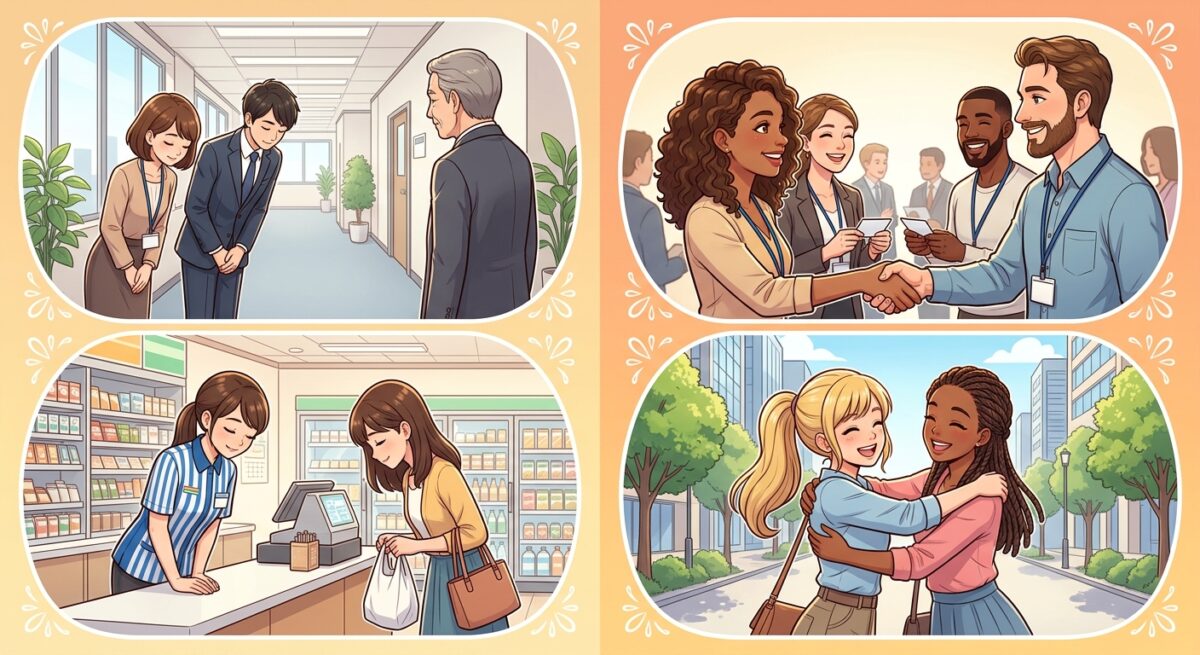
The biggest difference between Japanese and American greeting culture is how naturally bowing is built into everyday life in Japan. A bow can be used in many situations, and its meaning changes depending on the context.
- Greetings: A small nod or light bow can be used when saying hello, goodbye, or acknowledging someone.
- Apologies: A deeper or longer bow may be used when apologizing, especially in serious or formal situations.
- Gratitude: Bowing can show appreciation, from a small thanks at a shop to a more formal expression of gratitude.
- Respect: Bowing is often used when interacting with elders, teachers, customers, clients, or people in formal roles.
- Requests: A bow can make a request feel more polite, especially when asking for help or consideration.
✅ Tip
For most foreign visitors, a simple head nod or slight bow is enough in everyday situations in Japan.
🌏 Japan vs Other Countries
In the US, a handshake or verbal greeting is common. In Japan, a bow often plays a similar role as a greeting, thank-you, apology, or sign of respect.
Decoding Japanese Bows: An Etiquette Guide
Japanese bowing is not one fixed gesture. The depth, length, and timing can change depending on the situation. Foreign visitors do not need to master every detail, but knowing the basic idea can make interactions feel smoother.
Common Bows and Their Meanings
- Eshaku (会釈): A slight nod or shallow bow, often used for casual greetings, passing someone, or acknowledging a person briefly.
- Keirei (敬礼): A more polite bow, often used in business settings, customer service, formal greetings, or when showing clear respect.
- Saikeirei (最敬礼): A deep and very formal bow, used for serious apologies, deep gratitude, or highly formal occasions. Ordinary travelers rarely need to use this kind of bow.
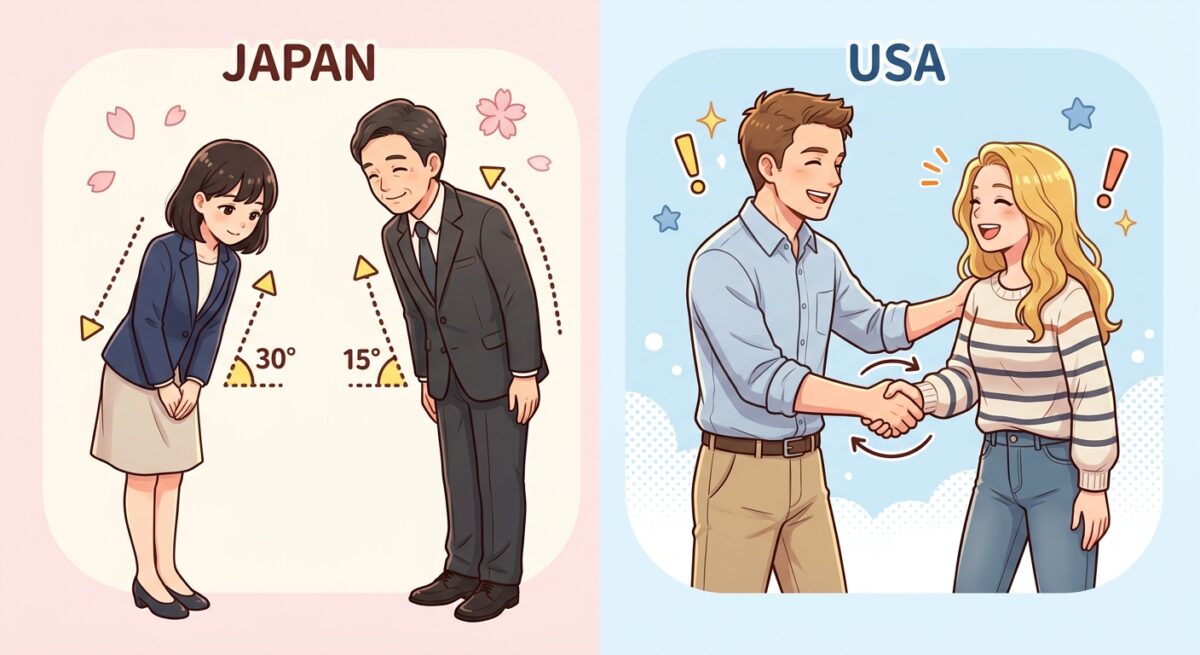
The American Contrast: Handshakes Over Bows
For visitors from the United States, it helps to remember that bowing is not a standard everyday greeting in American culture. In many US settings, people use a handshake, smile, wave, verbal greeting, or direct eye contact instead.
This difference can create small moments of cultural confusion. A Japanese person may naturally bow when greeting, thanking, or apologizing. An American visitor may instinctively reach for a handshake or simply say “hello.” Neither behavior is wrong in its own context, but understanding the difference helps both sides communicate more comfortably.
In Japan, handshakes may still happen, especially in international business or when meeting foreigners. However, a light bow or nod is often a safer and more natural response in everyday situations. You do not need to choose between bowing and speaking. A simple Konnichiwa or Arigato gozaimasu with a slight bow works well.
Practical Tips for American Visitors
If you are from the US, you do not need to become an expert in Japanese bowing. These simple tips will help you avoid awkwardness.
- Start with a small nod: In casual situations, a small nod is usually enough to show respect.
- Do not overdo deep bows: Deep bows are usually reserved for serious apologies, formal gratitude, or very respectful settings.
- Follow the other person’s lead: If someone bows lightly, respond lightly. If staff bow deeply to you as a customer, you do not need to match their exact depth.
- Use polite words: Combine a light bow with phrases like Arigato gozaimasu for “thank you very much” or Sumimasen for “excuse me” or “sorry.”
- Do not worry about perfection: Japanese people generally understand that foreign visitors are learning. A respectful attitude matters more than perfect technique.
FAQs About Bowing Culture
Q: Do I need to bow perfectly as a foreigner in Japan?
A: No. Local people generally do not expect foreigners to master every detail of bowing. A simple head nod or slight bow is usually appreciated.
Q: What should I do if someone bows to me in Japan?
A: Acknowledge the bow with a small bow or head nod in return. You do not need to match the exact depth or duration, especially if the person is bowing to you as a customer or guest.
Q: Is it rude not to bow at all in Japan?
A: It depends on the situation. In casual tourist settings, it is usually not a serious problem. However, returning a greeting with a small nod or bow is a simple way to show respect.
Q: Should I shake hands or bow in Japan?
A: In many everyday situations, a light bow or nod is safest. In international business settings, a handshake may also be offered. If unsure, wait a moment and follow the other person’s lead.
Q: Is bowing used the same way in the US?
A: No. In the US, bowing is uncommon in everyday greetings. It may appear in performances, martial arts, ceremonies, or as a playful gesture, but it is not a normal daily greeting like it is in Japan.
Conclusion: Embracing the Bow with Understanding
Bowing in Japan and greeting customs in the US reflect different ideas of politeness. In the US, a handshake, smile, or verbal greeting often carries the message. In Japan, a bow can quietly express greeting, respect, thanks, apology, or humility.
As a visitor, you do not need perfect form. A sincere nod or slight bow, combined with polite words and awareness of the situation, is enough for most everyday interactions. By understanding the cultural meaning behind the gesture, you can show respect and connect more naturally with people in Japan.
📝 Key Takeaways
- Bowing is a daily form of communication in Japan, but it is uncommon in everyday US culture.
- Japanese bows can express greetings, thanks, apologies, respect, or requests.
- American visitors usually only need a small nod or slight bow in casual situations.
- Deep bows are for serious, formal, or highly respectful situations.
- When unsure, observe the other person and respond politely without overthinking.
🚀 Want to Learn More?
Curious about other Japanese etiquette? Explore our guide on gift-giving customs!
