English “faith” can mean religious belief, a personal conviction, or trust in someone, and Japanese uses a different word for each. This guide compares 信仰 (shinkou), 信念 (shinnen), and 信頼 (shinrai) so your tattoo says the kind of faith you mean.
Quick Answer: Best Kanji for 'Faith'
English “faith” covers three different Japanese words. For religious faith, the standard word is 信仰 (shinkou), believing in and revering gods or buddhas. For a strong personal conviction, 信念 (shinnen) is the natural choice. 信頼 (shinrai) means trust or reliance in a person, relationship, or system.
Japanese Tattoo Word Examples

Understanding Kanji Options for "Faith"
Here are the common candidates for “faith” and what each one means:
1. 信念 (shinnen)
Meaning of 信念
信念 (shinnen) means "conviction," "belief," or "faith" in the sense of a strong personal principle or belief system. It suggests a deeply held belief that guides one's actions and outlook.
Naturalness for "Faith"
This word is natural and widely understood in Japanese when expressing personal conviction or a firm belief. It carries a positive nuance of inner strength and steadfastness.
Tattoo Suitability of 信念
As a tattoo, 信念 has a clear meaning and a balanced two-kanji shape, and it works well when the message is a core personal value or guiding belief.
Cultural Note on 信念
In Japanese, 信念 often refers to an individual's core principles or unwavering belief. This makes it a strong option for personal expression rather than a word that automatically points to a specific religious affiliation.
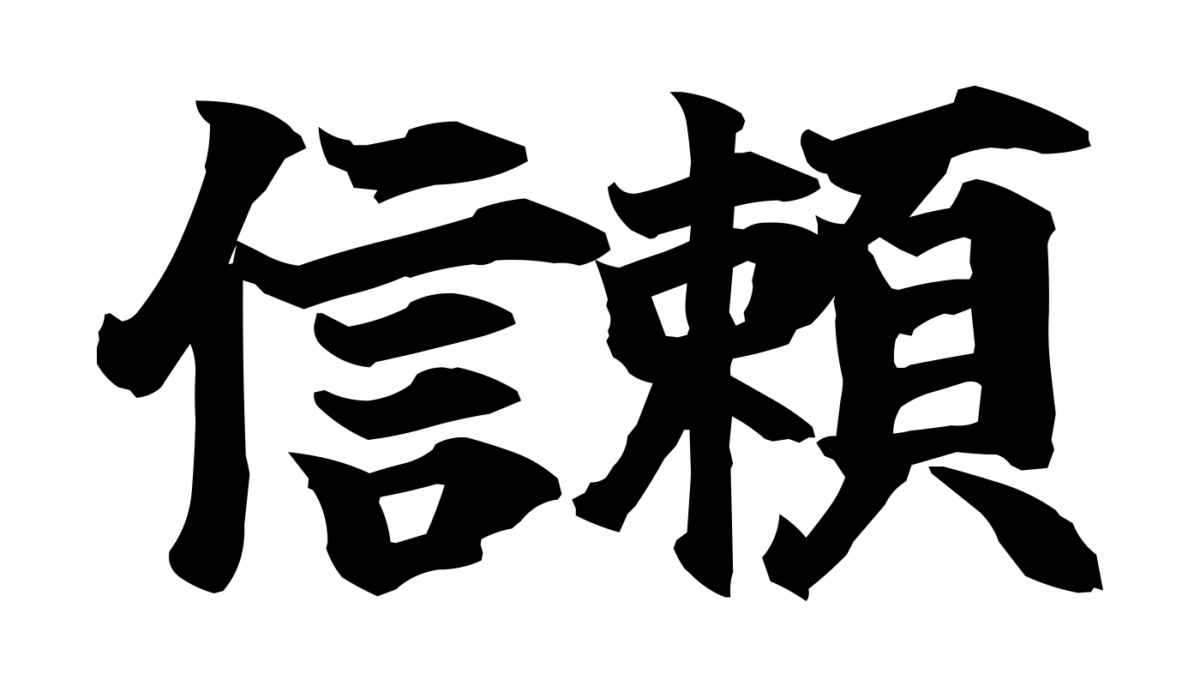
2. 信頼 (shinrai)
Meaning of 信頼
信頼 (shinrai) primarily means "trust," "reliance," or "confidence" in someone or something. It refers to belief in the honesty, ability, or reliability of another person, institution, or system.
Naturalness for "Faith"
While "faith" can sometimes include the idea of "trust," 信頼 is less natural if your intended meaning is personal conviction or spiritual faith. It may be misunderstood if your tattoo is meant to express an internal belief rather than trust in someone or something.
Tattoo Suitability of 信頼
This word can be suitable if your intended meaning is specifically "trust." However, for "faith" as personal conviction or a guiding belief, 信念 is usually a better fit.
Cultural Note on 信頼
信頼 mainly points to trust in a relationship, person, organization, or system. It does not usually convey spiritual or personal conviction in the same way as 信念.
Comparison Table: Kanji for "Faith"
| Japanese | Romaji | Meaning | How it reads as a tattoo | Best for |
|---|---|---|---|---|
| 信念 | Shinnen | Conviction, belief, personal faith | Reads as a firm personal conviction or guiding principle; not specifically religious. | Deep personal conviction, unwavering belief, or a strong guiding principle. |
| 信頼 | Shinrai | Trust, reliance, confidence | Reads as trust in someone or something (a person, a team, a company); it may be misread if you mean inner faith. | Trust in another person, a relationship, or a reliable system. Less fitting for spiritual or personal faith. |
| 信仰 | Shinkou | Religious faith; belief in and reverence for gods or buddhas | Reads clearly as religious faith. It can also mean unquestioning belief in something (ブランド信仰, brand worship), so context matters. | Faith in the religious or spiritual sense. |
Cultural Nuance: Distinguishing Types of "Faith"
Japanese separates the ideas that English groups under ‘faith.’ 信仰 (shinkou) is religious faith: believing in and revering gods or buddhas, or holding a religion’s teaching as your foundation. 信念 (shinnen) is a firm personal conviction. 信頼 (shinrai) is trust in someone or something. Decide which one you mean before choosing the kanji.
Tattoo Suitability Summary
For a Japanese tattoo representing 'faith,' words that clearly convey personal conviction and inner belief are usually more suitable than words that simply mean interpersonal trust. 信念 (shinnen) offers a clear meaning and balanced two-kanji appearance, making it a strong candidate when your intended meaning is personal conviction or belief.
Risk Summary: Choosing Your Kanji Wisely
The main thing to avoid is choosing a word for a different kind of ‘faith.’ 信頼 is trust, not belief; 信念 is personal conviction, not religion; 信仰 is religious faith. Before getting the tattoo, confirm whether you mean conviction, religious faith, or trust.
What to Avoid
Avoid choosing a Japanese word only because an online dictionary lists it as "faith." Some words may sound too religious, too formal, or closer to "trust" than personal conviction. Also be careful with phrases that sound like commands or statements rather than personal values.
Safer Alternatives for "Faith"
For ‘faith’ as personal conviction, 信念 (shinnen) is usually the clearest word. For religious faith, use 信仰 (shinkou). If your meaning is ‘trust,’ 信頼 (shinrai) fits, but only when that trust-based nuance is what you want.
Frequently Asked Questions
Key Takeaway: Choosing Your Kanji for 'Faith'
Choosing a Japanese word for ‘faith’ means deciding between religious faith ( 信仰 ), personal conviction ( 信念 ), and trust ( 信頼 ). For a tattoo about deep personal belief that is not specifically religious, 信念 (shinnen) is usually the clearest choice.
Related guides
This article is for educational guidance only. Before choosing a permanent tattoo, confirm the exact wording, nuance, and visual design with a trusted native Japanese speaker or professional tattoo artist.
Check Your Japanese Tattoo Before You Commit
Before you get it inked, use our Japanese Tattoo Checker to review the meaning, naturalness, cultural context, and tattoo suitability of your chosen Japanese wording.