自由 (jiyuu) is the standard Japanese word for “freedom” or “liberty.” This guide explains how it reads, where Japanese readers usually meet it, and which nearby words exist if you mean a particular kind of freedom.
Quick Answer: Is 自由 a Good Japanese Tattoo?
Yes, 自由 (jiyuu) is the direct, natural, and widely understood Japanese word for ‘freedom’ or ‘liberty.’ Its meaning is clear on its own; what still needs checking is the design, placement, and whether ‘freedom’ in general is the nuance you want.
How This Word Looks in Japanese

Understanding 自由 (jiyuu) for Your Tattoo
| Japanese | Romaji | Meaning | How it reads as a tattoo | Best for |
|---|---|---|---|---|
| 自由 | Jiyuu | Freedom, liberty | Reads at once as ‘freedom / liberty’. Two balanced kanji; also seen in everyday terms such as 自由席 (non-reserved seat). | Directly expressing freedom or liberty in a clear and natural way. |
Meaning of 自由 (jiyuu)
自由 (jiyuu) means 'freedom' or 'liberty' in Japanese. The word can describe the state of being free to act, think, or live without unnecessary restrictions. As a tattoo word, it is straightforward, easy to understand, and visually balanced because it uses two kanji characters.
How Natural Does 自由 (jiyuu) Sound?
自由 is a very natural and common word in Japanese. It appears in everyday conversation, books, news, education, and public discussion. Many Japanese speakers will immediately understand 自由 as 'freedom' or 'liberty,' so it is much clearer than many decorative or dictionary-only kanji choices.
Tattoo Suitability of 自由 (jiyuu)
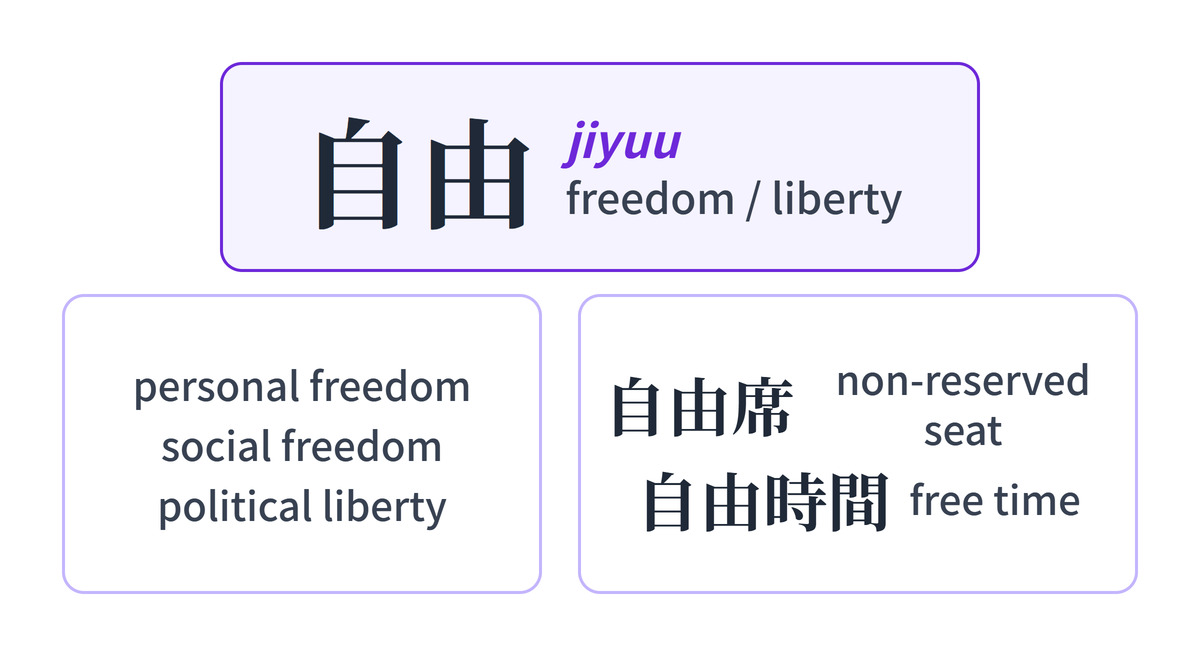
自由 (jiyuu) works as a tattoo word because it is short, balanced, and unambiguous. One thing to know: Japanese readers see 自由 every day in practical terms such as 自由席 (non-reserved seat) and 自由時間 (free time), so it reads as a plain, familiar word rather than a rare or poetic one.
Cultural Nuance of 自由 (jiyuu)
The word 自由 (jiyuu) is a fundamental concept in modern Japanese and can be used for personal freedom, social freedom, or political liberty. Its meaning is generally clear and direct. However, as with any tattoo, the final impression depends on calligraphy style, placement, surrounding design, and the personal message you want the tattoo to carry.
Risk Summary for 自由 (jiyuu)
自由 (jiyuu) is a well-established word, so the meaning itself is not the issue. What changes the impression is the design: font style, size, placement, and anything combined with it.
Related Words to 自由 (jiyuu)
自由 (jiyuu) is the most direct single word for ‘freedom.’ If you mean a specific kind of freedom, two related words are worth knowing: 解放 (kaihou), ‘liberation,’ being set free from something, and 自在 (jizai), ‘at ease, as one wishes,’ familiar from the idiom 自由自在 (freely, at will). Both are less common on their own than 自由, so check them with a native speaker first.
Frequently Asked Questions
Key Takeaway for Your Freedom Tattoo
For a Japanese tattoo meaning ‘freedom,’ 自由 (jiyuu) is natural and direct, and it is also an everyday word (自由席, 自由時間). Check the final design for visual balance and style, and compare 解放 or 自在 if you mean a specific kind of freedom.
Related guides
This article is for educational guidance only. Before choosing a permanent tattoo, confirm the exact wording, nuance, and visual design with a trusted native Japanese speaker or professional tattoo artist.
Check Your Japanese Tattoo Before You Commit
Considering 自由 or another Japanese word for your tattoo? Use our Japanese Tattoo Checker to review meaning, naturalness, cultural context, and tattoo suitability before you commit.