What Does “Bōtto (ぼーっと)” Mean?
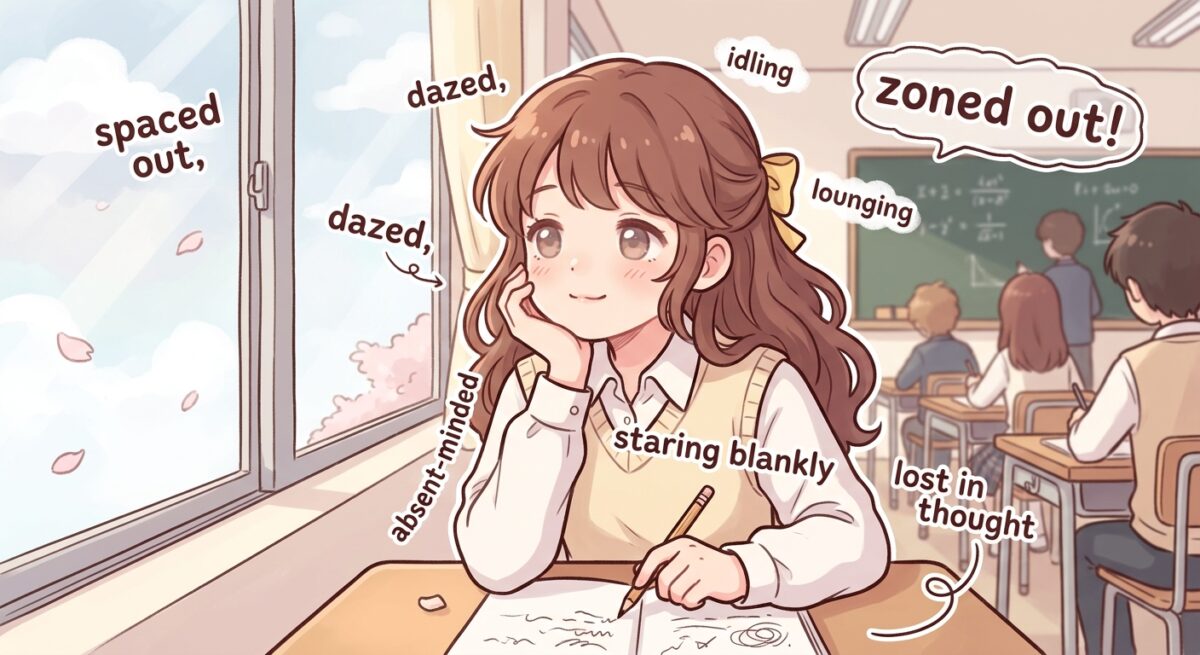
👉 Describes a state of being mentally unfocused, spaced out, absent-minded, dazed, or lost in thought. It implies a lack of alertness or engagement with one's immediate surroundings.
👉 Describes the act of spending time idly, doing nothing in particular, or simply lounging without any specific purpose or thought. This can also imply a dull, vacant gaze.
Nuance & Depth
ぼーっと suggests a lack of sharp focus, whether mental or visual. It can be neutral (relaxing) or slightly negative (lack of attention, dazed). The prolonged 'ō' sound and the small 'っ' (sokuon) convey a sustained, somewhat slow, and indistinct state. The voiced 'bo' gives it a softer, less sharp feel compared to 'po' (which might be more sudden or a light sound) or 'ho' (which can be a sigh). It often indicates a lack of mental activity or a hazy perception.
Bōtto vs spaced out, dazed, absent-minded, staring blankly, lost in thought, idling, lounging, zoned out: The onomatopoeia ぼーっと (bōtto) derives from the sound imagery of a prolonged, somewhat indistinct state. The 'ぼー' (bō) often indicates something dull, hazy, or prolonged, while the 'っと' (tto) adds a sense of completion or a sustained state. When combined, it vividly portrays a mental state characterized by a lack of sharp focus or a physical state of being vague/hazy. It's often used with 'する' (suru) to form 'ぼーっとする' (to be spaced out, to stare blankly).
Imagine This Situation
Example Sentences & Audio
(On Sunday, I spent time just lounging around at home BŌTTO(ぼーっと, idly).)
(During class, he's always BŌTTO(ぼーっと, staring blankly) out the window.)
(I have a fever, and my head feels BŌTTO(ぼーっと, dazed/hazy).)
Summary
👉 ぼーっと encapsulates the feeling and act of being mentally unfocused, dazed, or spending time idly, often characterized by a vague or hazy perception, both internally and externally.