What Does “Wakuwaku (わくわく)” Mean?
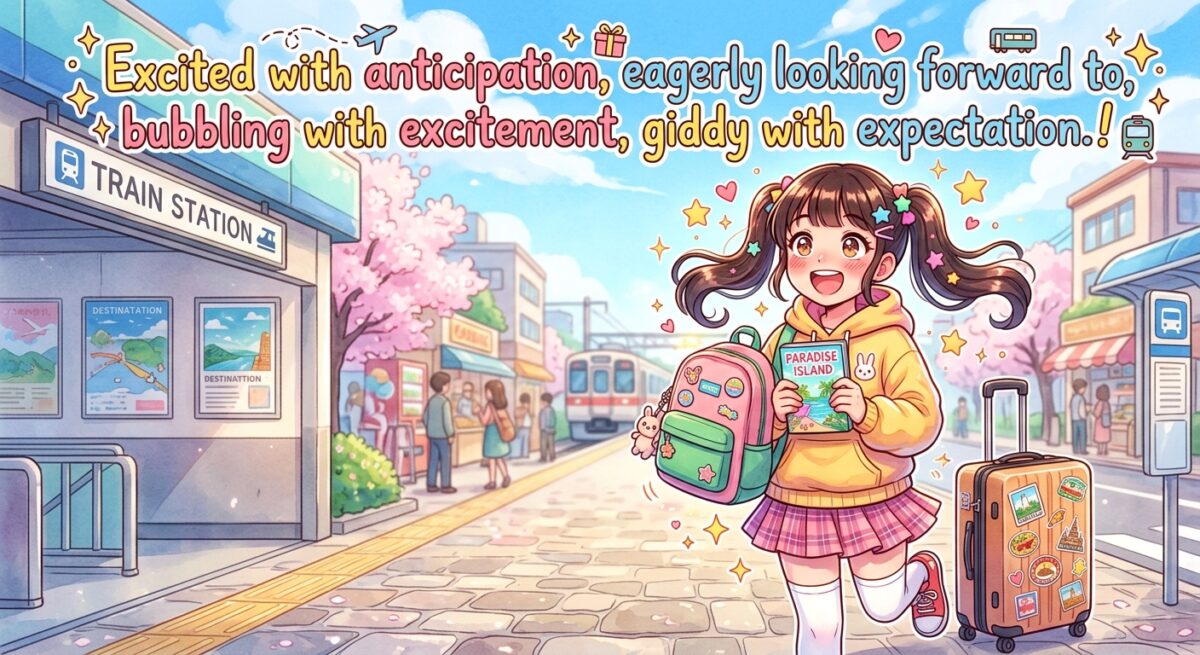
👉 A pure feeling of joyful and lighthearted anticipation, characterized by eager expectation for an upcoming positive event.
👉 The sensation of looking forward to something delightful with a sense of bubbling happiness.
Nuance & Depth
わくわく describes a light, positive, and often childlike excitement. It signifies a pleasant flutter in the heart or mind, indicating strong, joyful expectation for something good that is about to happen or will happen in the near future. It does not carry connotations of nervousness, fear, or intense, overwhelming thrill, but rather a hopeful and pleasant eagerness for a positive outcome.
Wakuwaku vs Excited with anticipation, eagerly looking forward to, bubbling with excitement, giddy with expectation.: わくわく is a reduplicated mimetic word (擬態語, gitaigo) describing an internal psychological state rather than a sound (擬音語, giongo). It's most commonly used in the form 'わくわくする' (wakusuru), acting as a verb meaning 'to feel eagerly excited' or 'to feel joyful anticipation'. The root 'わく' (waku) can metaphorically imply something 'welling up' or 'bubbling up' from within, perfectly describing the feeling of excitement rising in one's heart.
Imagine This Situation
Example Sentences & Audio
(I'm looking forward to next week's trip, and I feel WAKUWAKU (eagerly excited) already.)
(The moment you open a present, you always feel WAKUWAKU (eagerly anticipating), don't you?)
(The children are waiting for Christmas, feeling WAKUWAKU (bubbling with excitement).)
Summary
👉 'わくわく' perfectly captures the essence of joyful and lighthearted anticipation for something pleasant in the future, embodying a pure and positive form of eagerness.