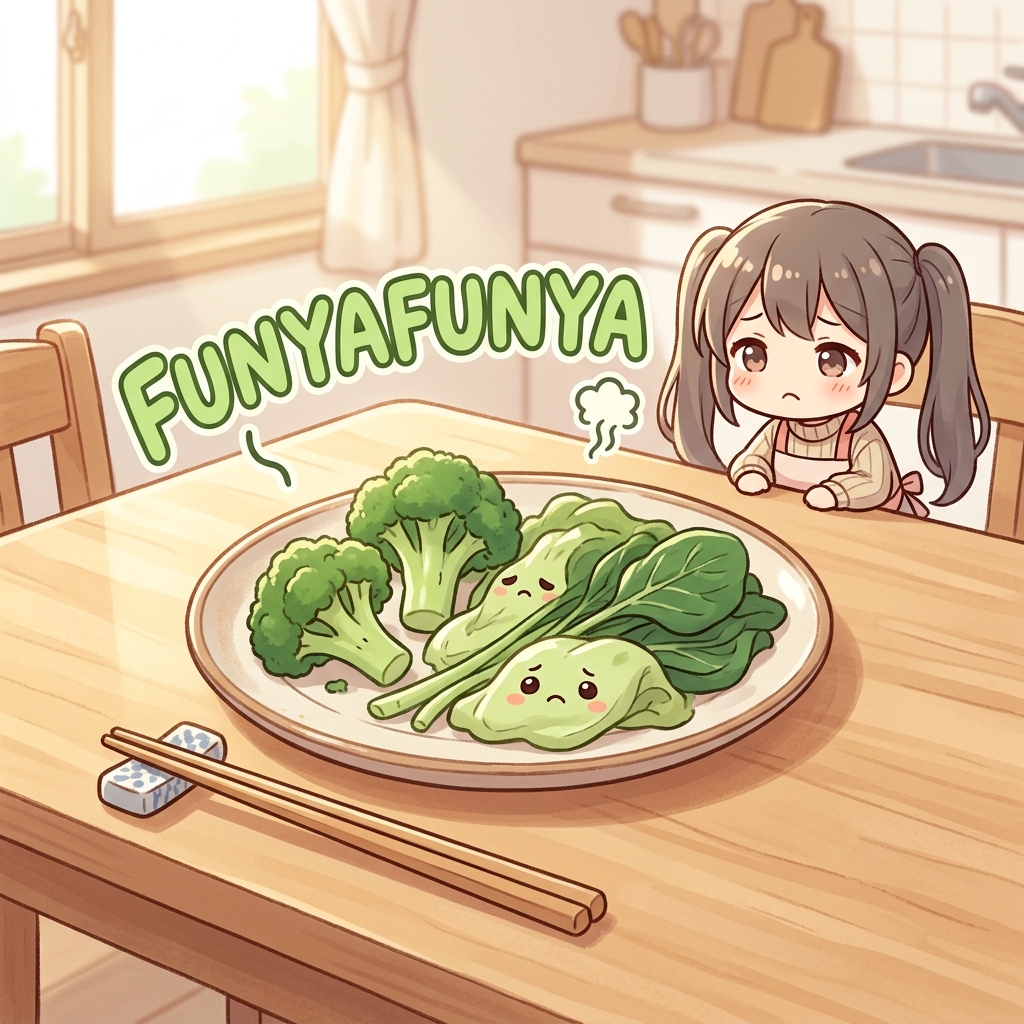
The Delicious Scene Behind the Word
Imagine biting into a potato chip that should be crisp, only to find that it has gone soft from humidity. Or maybe you overcooked your noodles, and they no longer have a pleasant bite. In Japanese, ふにゃふにゃ (funyafunya) is a useful word for describing this kind of soft, limp, or weakened texture.
ふにゃふにゃ (funyafunya) describes something that lacks firmness, strength, or crispness. In food contexts, it is often used when something has lost its expected texture and become too soft, limp, or soggy. It is especially useful when simple words like “soft” do not fully capture the feeling.
How Japanese Describes Food Textures
Japanese onomatopoeia, or giongo and gitaigo, are not only about sounds. Many of them describe states, movements, textures, and feelings. ふにゃふにゃ (funyafunya) is a good example of a word that describes a state or texture rather than an actual sound.
The feeling of ふにゃふにゃ is soft, weak, limp, or lacking firmness. It can describe food, but it is not limited to food. A soft toy, a deflated balloon, a weak body, or something flimsy can also be described with ふにゃふにゃ depending on the context.
When This Word Sounds Natural
ふにゃふにゃ (funyafunya) sounds natural when something has lost firmness, elasticity, crispness, or strength. Here are some common examples:
- Overcooked Vegetables: If vegetables are boiled too long and lose their bite, you can say 野菜がふにゃふにゃになった (Yasai ga funyafunya ni natta) - The vegetables became too soft or limp.
- Soggy Snacks: Potato chips, crackers, or cookies left open in humid air may become ふにゃふにゃ because they lose their crispness.
- Limp Noodles or Pasta: Noodles that are overcooked or have been sitting too long can become soft and lose their chewiness.
- Softened Objects: A deflated balloon, a worn-out soft item, or something that no longer holds its shape may also be described as ふにゃふにゃ.
Using ふにゃふにゃ helps you describe a specific kind of softness. It often suggests that something no longer has the firmness or texture it should have.

A Common Learner Mistake
Common Pitfall: Overusing 「柔らかい」 (yawarakai)
Many learners use 柔らかい (yawarakai) for anything soft. This word is correct in many situations, especially for naturally soft things like soft bread, a soft pillow, or tender meat. However, ふにゃふにゃ (funyafunya) adds a different nuance. It often suggests that something is limp, weak, soggy, or lacking firmness. For example, ポテトチップスが柔らかい may be understood, but ポテトチップスがふにゃふにゃだ sounds much more natural when chips have lost their crispness from humidity.
Choose ふにゃふにゃ When Firmness Is Lost
Tip: When to Choose ふにゃふにゃ (funyafunya)
Choose ふにゃふにゃ (funyafunya) when something feels soft in a weak, limp, or unstable way. In food contexts, it often means the food has lost its ideal texture. In non-food contexts, it can describe something floppy, flimsy, deflated, or lacking strength. The word can be negative, neutral, or sometimes affectionate, depending on what you are describing.
Hear ふにゃふにゃ (funyafunya) in Context
Play the audio and listen to how the examples sound in Japanese.
Japanese: 野菜を茹ですぎて、ふにゃふにゃになっちゃった。
English: I overcooked the vegetables, and they became too soft and limp.
Japanese: 湿気でポテトチップスがふにゃふにゃだ。
English: The potato chips have gone soft from the humidity.
Similar Food Textures in Japanese
While ふにゃふにゃ (funyafunya) is useful for limp or softened textures, Japanese has many other words for food textures:
- カリカリ (karikari): Crispy or crunchy, often for fried or toasted foods.
- サクサク (sakusaku): Lightly crispy, flaky, or crunchy, often for tempura, pie crust, or fresh snacks.
- もちもち (mochimochi): Chewy and springy, often for mochi, bread, or noodles.
- とろとろ (torotoro): Melty, thick, gooey, or very soft and smooth.
- シャキシャキ (shakishaki): Crisp and fresh, often for vegetables like lettuce, bean sprouts, or apples.
Understanding these differences will help you talk about food in Japanese with much more accuracy.
Frequently Asked Questions
Can ふにゃふにゃ (funyafunya) be used for non-food items?
Yes. ふにゃふにゃ (funyafunya) can describe non-food items that are soft, limp, floppy, weak, or lacking firmness. For example, a deflated balloon, a flimsy object, a very soft toy, or a worn-out towel might be described this way. It can also describe a person’s body when they feel weak or drained, as in 疲れて体がふにゃふにゃだ (Tsukarete karada ga funyafunya da) - I’m so tired that my body feels weak and limp.
Is ふにゃふにゃ (funyafunya) always negative?
No, not always. In food contexts, it often sounds negative because it suggests a loss of good texture, such as soggy chips or overcooked vegetables. However, for a soft toy or something pleasantly floppy, it can sound neutral or even cute. The nuance depends on whether the softness is desirable or undesirable in that situation.