I chose the stairs, not the elevator
Tokyo Tower's observation deck is usually a two-minute elevator ride from the ground. I bought the same ticket everyone else buys, but I didn't get in the elevator. Tokyo Tower has a dedicated outdoor staircase that goes all the way up to the Main Deck, open to anyone with a regular admission ticket, and I climbed it instead.
Personal note: I'm working from memory here, not notes from the day, so I'm not going to guess at the year, the season, or what the weather was like. What I can say with confidence is what I actually did: I bought a ticket, skipped the elevator, and walked up.
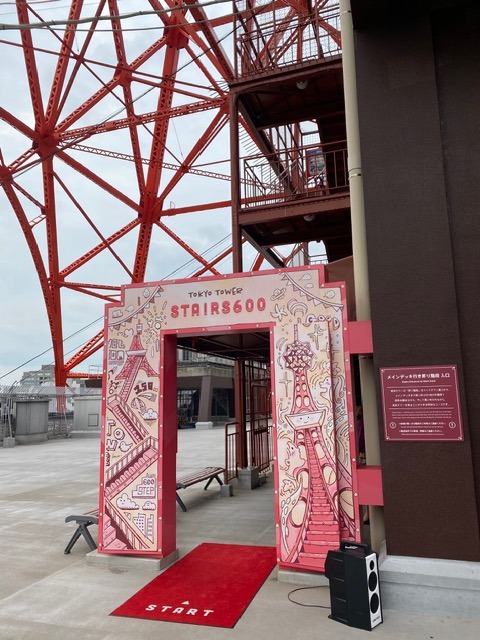
The marked starting point of the outdoor staircase route, at the base of the tower.
The stairs themselves
The staircase starts on the roof of Foot Town, the building at the base of the tower, and climbs open-air the whole way to the Main Deck, 150 meters up. It isn't hidden or a side attraction -- it's a fully signposted route with the same admission ticket as the elevator, just a different way of using it. You're outside the whole time, with the city opening up below you as you go.
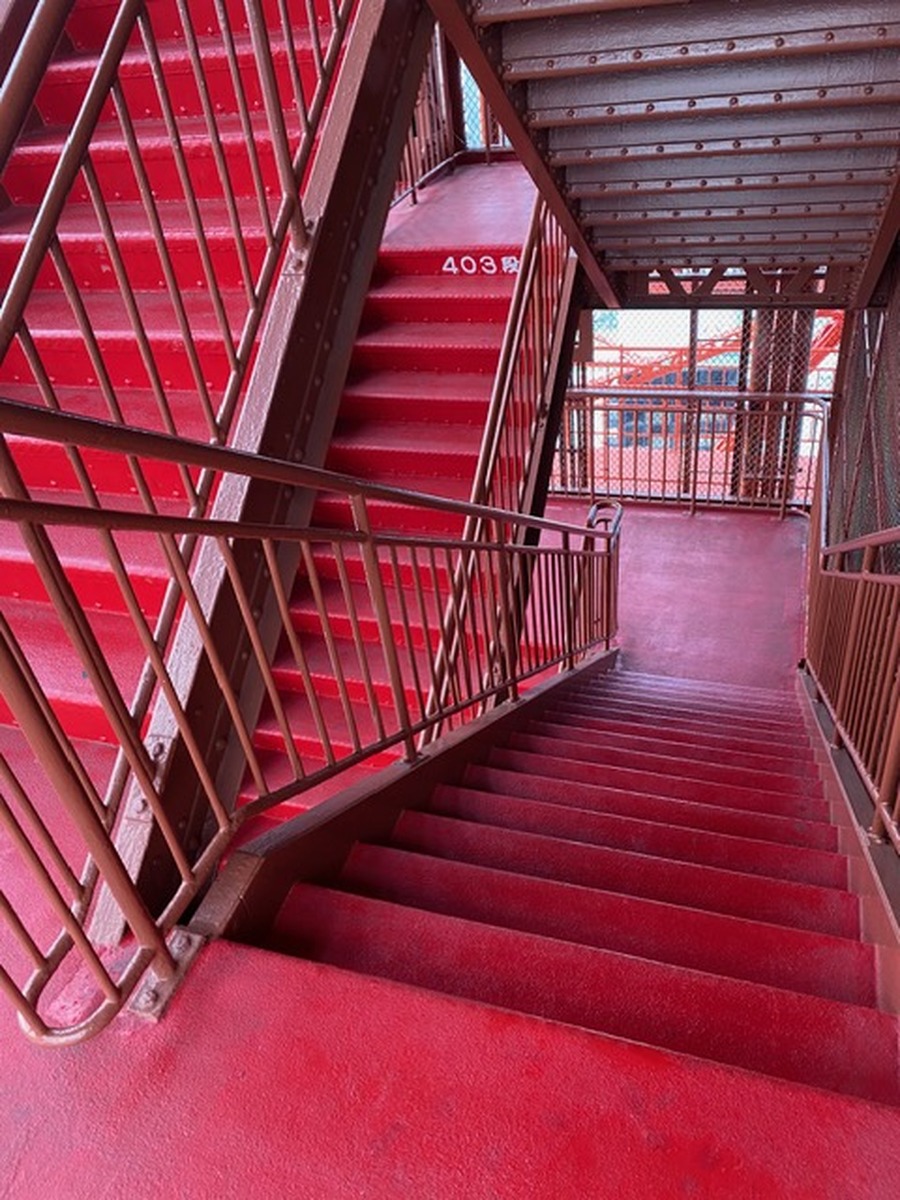
Photo from my climb up Tokyo Tower's outdoor stairs.
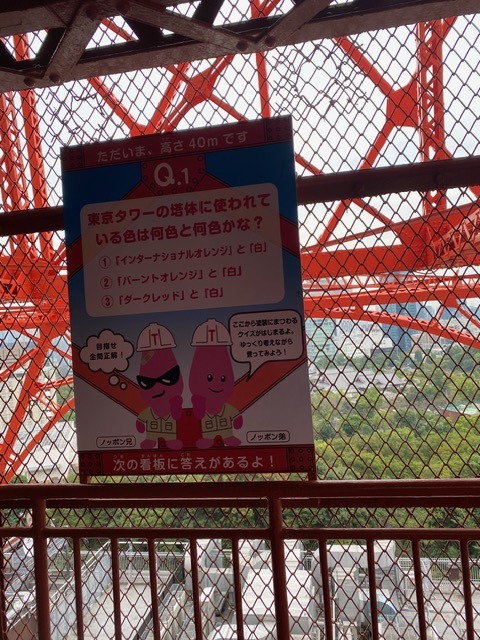
One of several quiz signs posted along the climb, marking height and testing tower trivia as you go up.
How long it took me
I remember it taking me around 15 minutes, give or take. That's my own recollection, not a stopwatch figure, so treat it as an impression rather than a measurement -- see the officially stated time below for a more precise number.
How it actually felt
I was quite tired by the top. That's the honest version. It isn't a casual stroll -- it's several hundred steps in a row, outdoors, at your own pace, and by the last stretch I was feeling it. What stood out more than the tiredness, though, was the difference in how arriving felt. Taking an elevator gets you to the same observation deck, but you didn't do anything to get there. Climbing the stairs, tired or not, felt like I had actually gone up the tower myself, not been carried up it.
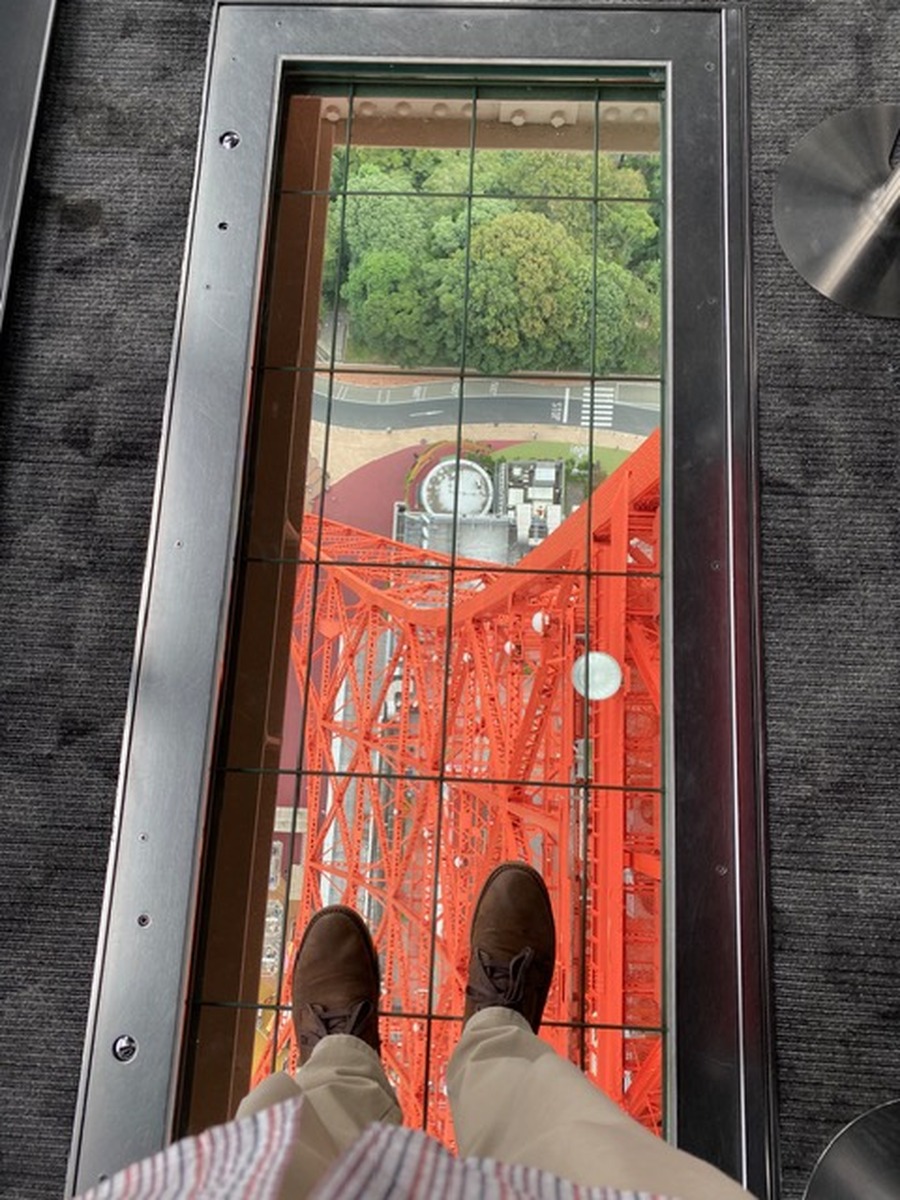
Photo taken after reaching the Main Deck.
What the current rules actually say
Here's where I'm switching from my own memory to what Tokyo Tower's official site states, checked directly and current as of 2026-09-12 -- treat this section as separate from the personal account above.
- The route is officially called the "Open-air Outdoor Stairs Walk" ("オープンエア外階段ウォーク"), running from the Foot Town rooftop to the Main Deck, a climb of about 600 steps and 150 meters.
- Tokyo Tower's own estimate is about 12 to 13 minutes to climb, and the site notes that even preschool-age children typically finish in around 15 minutes -- which happens to line up closely with my own memory, though mine is a recollection, not a timed climb.
- As of this check, the up staircase is open weekends and holidays only, 9:00 to 16:00; the down staircase (a separate route) is open every day, 9:00 to 20:00. Hours are occasionally extended for specific holiday periods, and the official page notes hours can change without notice, so check the current schedule before you go rather than relying on this article.
- No extra fee applies -- the regular observation-deck ticket covers the stairs. As of this check, Main Deck admission for adults is 1,500 yen. Reduced rates apply to high school students and younger children.
- Both stairs are cancelled in rain, severe weather, or when a heatstroke warning is in effect.
- One rule worth knowing before you start: you cannot switch from the stairs to the elevator partway up. Once you commit to the outdoor stairs, you finish on foot. You can, however, take the elevator back down from the Main Deck afterward -- the stairs and the elevator aren't an all-or-nothing choice for the whole visit, just for the way up.
- Everyone who completes the up staircase receives a small certificate (a "Noppon-approved climbing certificate," referencing the tower's mascot characters) -- the down staircase doesn't come with one.
- Not verified: Tokyo Tower's page doesn't state a formal minimum age or a supervision requirement for the stairs; it only mentions that preschool-age children commonly finish it, which isn't the same as an official age policy. If you're climbing with a young child, it's worth confirming current guidance with tower staff on the day.
- Not verified: nothing on the official stairs page specifically addresses climbing with a large suitcase or bag. If you'd rather not carry one up nearly 600 outdoor steps, Foot Town has its own coin lockers on the 1st floor (100 to 300 yen depending on size, following the building's opening hours), which is a more practical option than guessing whether stairs and luggage mix well. If the suitcase problem is elsewhere in Tokyo rather than at the tower itself, Why Japan's guide to taking a large suitcase on Tokyo's trains at rush hour covers that specific situation in more depth.
Stairs or elevator?
- Short on time or want the view without the effort: take the elevator. It's faster, and it's the same observation deck at the top.
- Curious what climbing it actually feels like, and reasonably comfortable on stairs: the outdoor route is worth trying -- it's a genuinely different experience from the elevator, not just a slower version of the same one.
- Visiting on a weekday: the up staircase is weekends/holidays only as of this check, so a weekday visit means the elevator by default -- confirm current days before planning around it.
- Poor weather forecast: don't count on the stairs being open; both directions close in rain, severe weather, or a heatstroke warning.
- Traveling with a large bag or suitcase: consider using the coin lockers at Foot Town rather than carrying it up, since the official stairs information doesn't address luggage at all.
- Once you start climbing: know that you're committed to finishing on foot -- there's no switching to the elevator partway, though you can ride it back down afterward.
The bottom line
Most people's mental model of Tokyo Tower is an elevator ride to a view. Mine, now, includes a version where you get there on your own legs -- tired, slower, and with a small paper certificate to show for it. Neither way is the "right" way to see the tower; they're just genuinely different experiences attached to the same ticket. If you've ever wondered whether there was more to Tokyo Tower than the elevator, there is, and it's about 600 steps away. For another way to experience Tokyo on foot rather than from a seat, Why Japan's account of walking the full Yamanote Line loop covers a very different kind of self-powered detour around the city. And if a few hundred steps sounds manageable but a mountain sounds like the real challenge, climbing Mount Fuji from the fifth station took about 11 hours the other way up the effort scale.