If you want a Japanese tattoo that means “trust,” you may first find the word 信頼 (shinrai). It is a correct Japanese word meaning trust, reliance, or confidence.
However, for a tattoo, the best choice depends on the feeling you want. 信頼 is understandable, but it can sound a little formal or relational. If you want a shorter and more personal kanji about faith, belief, or trust, 信 (shin) may be a better option.
Quick Answer: Is 信頼 (shinrai) Good for a “Trust” Tattoo?
信頼 (shinrai) correctly means “trust,” but it is not always the most natural choice for a personal virtue tattoo. It often sounds like trust in a person, organization, relationship, or reliability.
For a shorter and more symbolic tattoo, 信 (shin) is often easier to use. It can mean faith, belief, trust, or sincerity depending on context.
How This Word Looks in Japanese
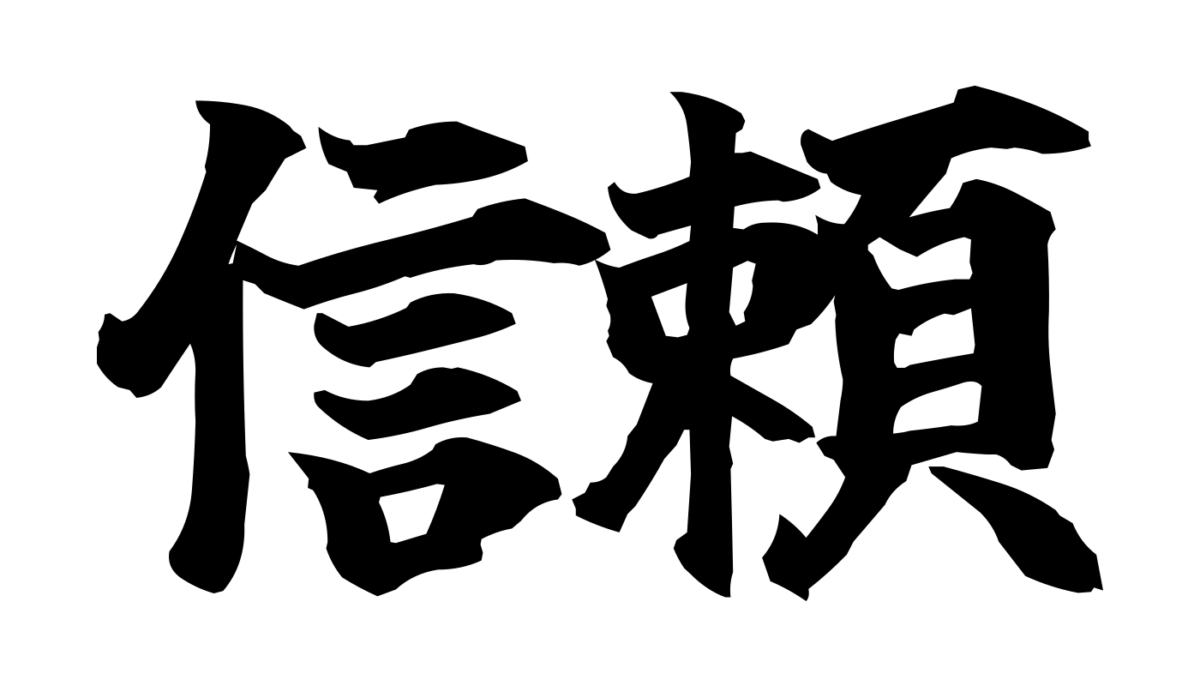
Meaning of 信頼 (shinrai)
信頼 (shinrai) means trust, reliance, or confidence. It is made from two kanji: 信, meaning faith, belief, or trust, and 頼, meaning to rely on or depend on.
As a normal Japanese word, 信頼 is clear and widely understood. You may see it in phrases about trusting a person, building trust, professional reliability, or confidence in someone’s ability.
How Natural Does 信頼 (shinrai) Sound for a Tattoo?
信頼 is natural Japanese, but as a standalone tattoo it can feel a little formal or abstract. It sounds more like “trust” in a relationship, organization, or dependable person than a poetic personal virtue.
This does not mean 信頼 is wrong. It means the tone may not match every tattoo intention. If your goal is a personal value such as faith, belief, or inner trust, a simpler kanji like 信 may feel more suitable.
Tattoo Suitability of 信頼 (shinrai)
The kanji in 信頼 are clear and readable, so the word itself is not confusing. The main issue is nuance. As a tattoo, 信頼 may feel more like “reliability” or “established trust” than a deep personal statement.
If you specifically want to express trust between people, trust built over time, or confidence in someone, 信頼 can work. If you want a compact personal virtue tattoo, 信 may be lower risk and more visually concise.
Nuance of 信頼 (shinrai)
信頼 often suggests established trust. It is commonly used for relationships, teamwork, business, institutions, and reliability. For example, a reliable person, a trusted company, or a relationship built on trust can be described with 信頼.
Because of that, 信頼 may feel a little practical or formal when used alone as a tattoo. It is understandable, but it may not feel as symbolic or elegant as a single-kanji option.
Comparison: 信頼 (shinrai) vs. Safer Alternatives
| Japanese | Romaji | Meaning | Naturalness | Tattoo Score | Risk | Best for |
|---|---|---|---|---|---|---|
| 信頼 | shinrai | Trust, reliance, confidence. | 75 | 60 | Medium | Trust in a person, relationship, team, or reliable connection. |
| 信 | shin | Faith, belief, trust, sincerity. | 88 | 88 | Low to medium | A compact personal virtue tattoo about faith, belief, or trust. |
| 信念 | shinnen | Conviction, belief, personal principle. | 90 | 82 | Low to medium | A tattoo about personal conviction rather than trust in someone else. |
Safer Alternatives for “Trust”
If you want a compact tattoo for “trust,” 信 (shin) may be easier to use than 信頼. It is short, visually simple, and can suggest faith, belief, trust, or sincerity.
If your intended meaning is closer to “believe in my path” or “personal conviction,” 信念 (shinnen) may also be worth considering. It does not mean trust exactly, but it can be more suitable for a personal motto.
Still unsure about your Japanese tattoo idea? Use our Japanese Tattoo Checker to check naturalness, meaning, and suitability before getting it inked.
Frequently Asked Questions
Key Takeaway
For a Japanese tattoo meaning “trust,” 信頼 (shinrai) is understandable but somewhat formal and relational. For a compact personal virtue tattoo, 信 (shin) is often a cleaner and more symbolic option.
This article is for educational guidance only. Before choosing a permanent tattoo, confirm the exact wording, nuance, and visual design with a trusted native Japanese speaker or professional tattoo artist.