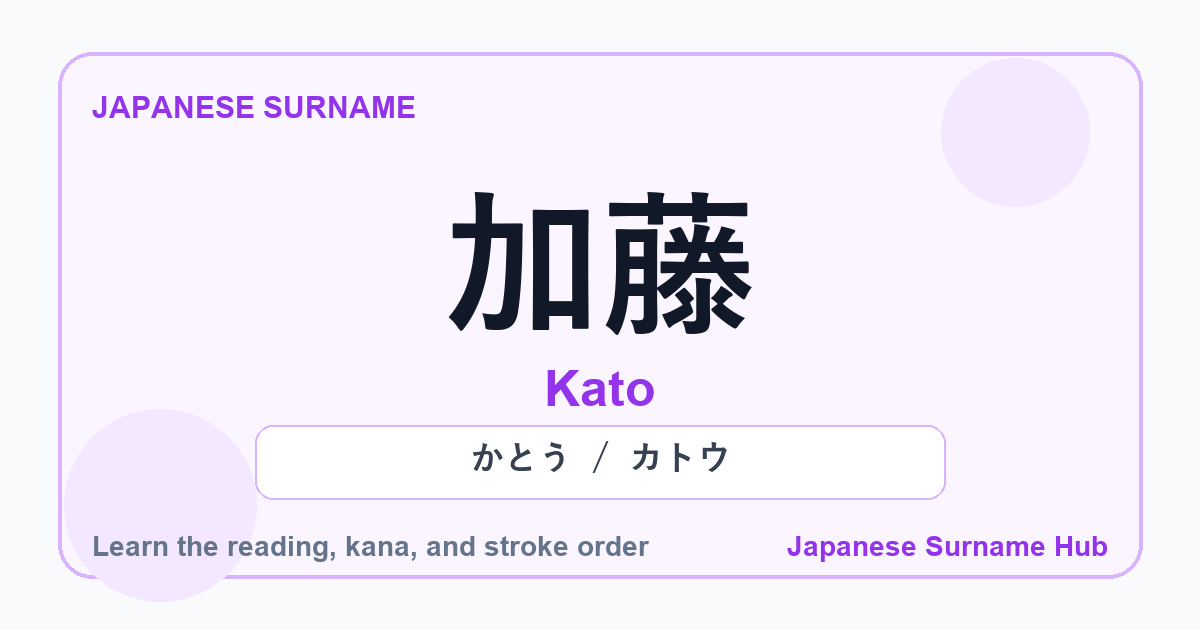
Quick Answer: 加藤 (Katō)
The Japanese surname 加藤 (Katō) is a widely recognized surname in Japan. It is written with two kanji:
- 加 (ka) meaning "add," "increase," or "join."
- 藤 (tō) meaning "wisteria."
Although the kanji can be read literally as ideas like "add" and "wisteria," Japanese surnames are usually not interpreted as simple word-for-word translations. The meaning and origin of 加藤 are better understood through historical naming traditions, family lines, regions, and the common use of the 藤 element in surnames.
Common Reading: Katō
Hiragana: かとう
Katakana: カトウ
Romaji: Katō, or Katou when writing the long vowel as "ou."
The long ō sound in Katō is important for correct pronunciation.
What Does the Japanese Surname 加藤 (Katō) Mean?
The surname 加藤 (Katō) is formed from two kanji characters: 加 and 藤. Each kanji has its own meaning, but the surname itself should not be treated as a simple phrase made by joining those meanings together.
The first kanji, 加 (ka), generally means "to add," "to increase," or "to join." It appears in common Japanese words such as 加える (kuwaeru), meaning "to add," and 参加 (sanka), meaning "participation."
The second kanji, 藤 (tō), means "wisteria." This character is very common in Japanese surnames, including names such as Satō, Itō, Endō, and Kondō. In some explanations, 藤 is associated with Fujiwara-related naming traditions because 藤 is also the first kanji in 藤原 (Fujiwara). However, it is important not to assume that every surname containing 藤 proves direct Fujiwara lineage.
For 加藤, it is safer to understand the name as a historically layered surname rather than translating it literally as "added wisteria." The exact origin can vary depending on family history, region, and historical records.
Kanji Breakdown for 加藤
Understanding the individual kanji helps you recognize the structure of the surname.
| Kanji | Basic Meaning | Learning Note |
|---|---|---|
| 加 (ka) | Add, increase, join, apply | This kanji appears in words like 加える (kuwaeru), meaning "to add," and 参加 (sanka), meaning "participation." |
| 藤 (tō) | Wisteria | 藤 means wisteria and is a frequent element in Japanese surnames. It may be linked to historical naming traditions, but the exact background depends on the family and region. |
How to Read 加藤 (Katō)
The standard reading of 加藤 is Katō.
| Kanji | Hiragana | Katakana | Romaji | Reading Note |
|---|---|---|---|---|
| 加藤 | かとう | カトウ | Katō / Katou | The standard reading. The ō in Katō is a long vowel. Katou is another way to show the same long vowel in romaji. |
Romaji and Pronunciation Notes
For 加藤, the romaji is often written as Katō. It may also be written as Katou, especially when avoiding macrons.
- The ka sound is close to "kah."
- The tō sound has a long "o" vowel. The macron in ō shows that the vowel is held longer than a short "o."
In everyday English-language contexts, you may also see the spelling Kato without the macron. However, Katō or Katou more clearly represents the Japanese pronunciation. When writing a real person's name, it is best to follow that person's preferred romanization.
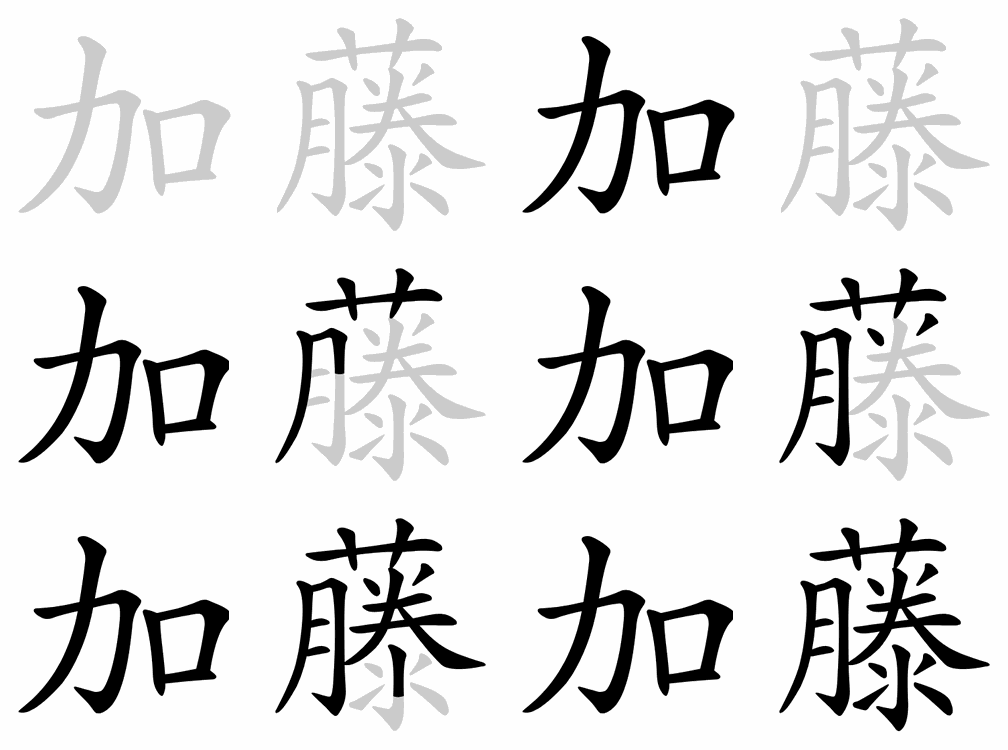
Kanji Stroke Order for 加藤
Learning stroke order can help with kanji recognition and handwriting. Here is the stroke order for 加藤:
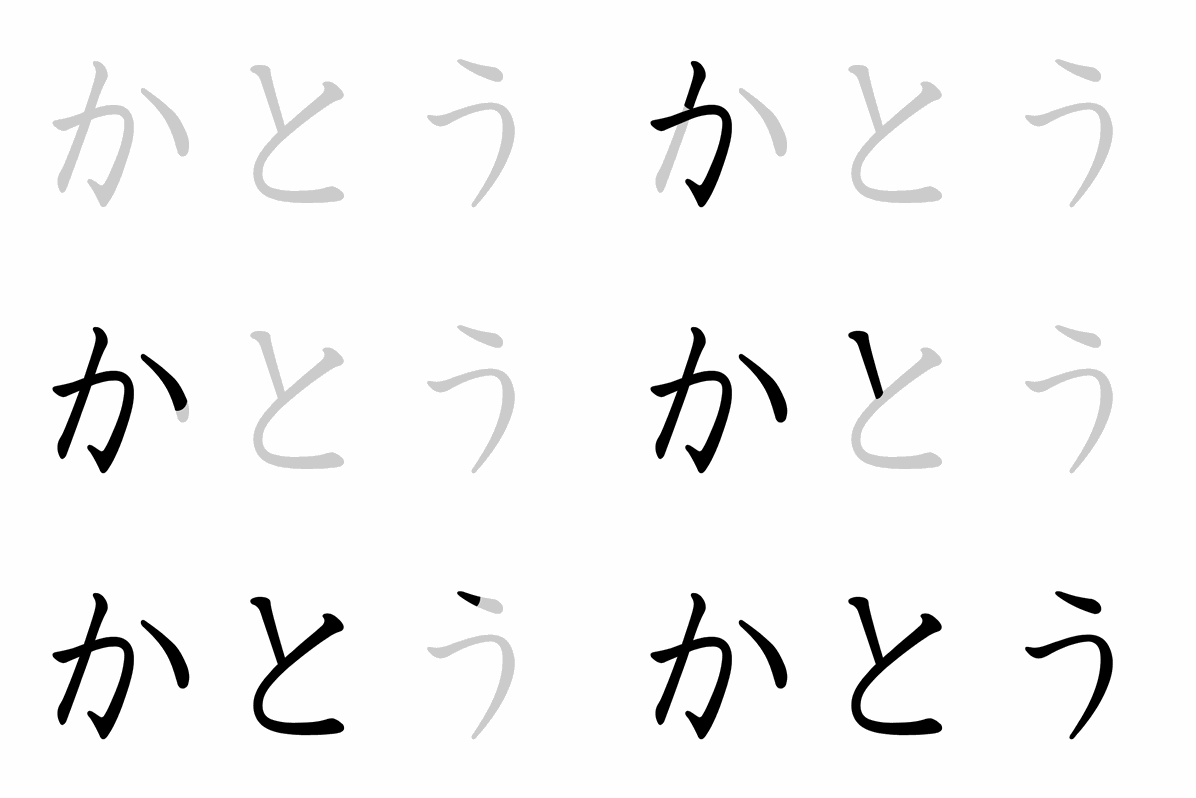
Hiragana Stroke Order: かとう
Hiragana is a phonetic script used to show Japanese pronunciation. Here is the stroke order for かとう:
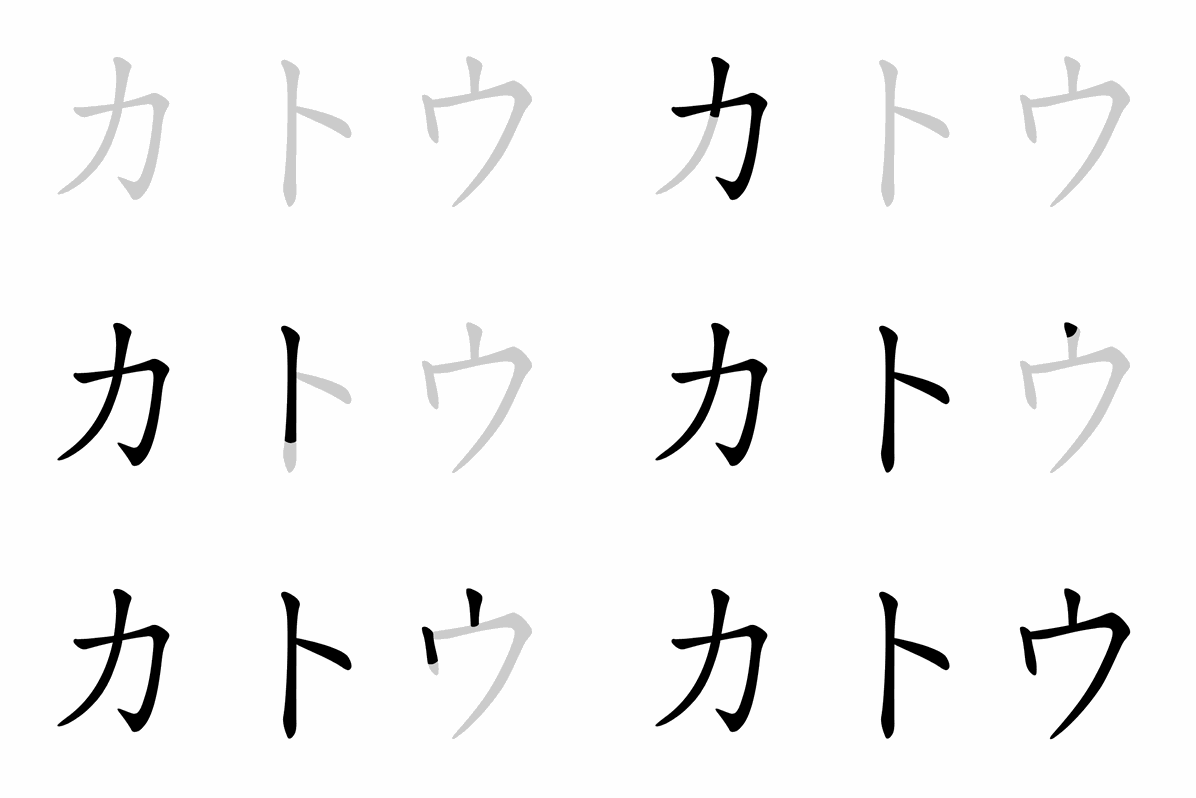
Katakana Stroke Order: カトウ
Katakana is another phonetic script. It is often used for loanwords, foreign names, emphasis, and pronunciation guides. Here is the stroke order for カトウ:
Learning Note for 加藤
When learning Japanese surnames like Katō, keep these points in mind:
- Recognize the kanji: 加 and 藤 are both useful kanji to know. They also appear in other words and names.
- Notice the long vowel: The long ō sound is an important part of Katō. In romaji, it may be written as Katō, Katou, or sometimes Kato without the mark.
- Avoid oversimplifying surname meanings: Kanji meanings are helpful, but surname origins can be complex. Do not assume a single family history from the kanji alone.
- Learn multiple forms: Knowing the kanji, hiragana, katakana, and romaji forms makes the surname easier to read, write, and pronounce.
加藤 is a familiar Japanese surname that learners are likely to encounter in daily life, media, and study materials.
FAQ About 加藤 (Katō)
Is 加藤 (Katō) a common Japanese surname?
Yes, 加藤 (Katō) is a very familiar Japanese surname and is widely recognized in Japan. Learners may encounter this name in everyday life, media, sports, business, and historical contexts.
What is the origin of the surname 加藤 (Katō)?
The surname 加藤 (Katō) is often explained through historical naming traditions. 藤 means wisteria and is a common surname element. One medieval Katō family of Ise Province traced itself to the Fujiwara (Toshihito line), but that is one family's tradition, not proof for every Katō (source: 改訂新版 世界大百科事典 (Heibonsha), entry 加藤氏). Some explanations connect 藤-containing surnames with Fujiwara-related naming traditions, but the exact background can vary by family line, region, and historical records. It is not accurate to assume one single origin story for all families with this surname.
How do I correctly pronounce the long “o” in Katō?
The long “o” in Katō is held a little longer than a short “o.” In Japanese kana, this is shown by かとう, where the final う lengthens the previous o sound. In romaji, it may be written as Katō with a macron or Katou with “ou.”
Are there other kanji spellings for Katō?
加藤 is the standard and most commonly seen kanji form for this surname. 香藤 is a different surname listed with the same reading かとう; learners should first focus on 加藤 (source: 精選版 日本国語大辞典, entry かとう【加藤・香藤】). If you are writing a real person's name, always confirm that person's preferred kanji and romanization.
What is the significance of the 藤 (tō) kanji in Japanese surnames?
The 藤 (tō) kanji means "wisteria" and is a very common component in Japanese surnames, such as Satō, Itō, Endō, and Kondō. It is often discussed in relation to Fujiwara-related naming traditions, but its presence does not automatically prove direct Fujiwara lineage for every family. The background can differ depending on family history, region, and records.
Want to turn your own name into Japanese?
Use our Japanese Name Converter to see how your first name can be written in Japanese katakana and creative kanji ideas with meanings.
Try the Japanese Name Converter
Creative kanji ideas are for inspiration only. Foreign names are usually written in katakana.