Quick Answer: Mori (森)
Japanese Surname: 森
Common Reading (Hiragana): もり
Common Reading (Katakana): モリ
Romaji: Mori
Long Vowel Note: The standard reading Mori has no long vowels, so no macron is normally needed.
The surname Mori (森) is a familiar Japanese family name that learners are likely to encounter. Its kanji is easy to remember because the character itself is connected to trees and forests.
What Does the Japanese Surname Mori Mean?
The Japanese surname Mori (森) is written with the kanji 森, meaning “forest” or “woods.”
This kanji is made from three 木 characters. 木 means “tree,” so three trees together create the image of a forest or wooded area.
Mori is often explained as a place-name type surname, possibly connected to a forest, woods, or a place named Mori. However, the exact background can vary by family line, region, and historical records. The kanji gives a clear image, but it should not be treated as a complete origin story for every family named Mori.
Kanji Breakdown: 森
The surname Mori is written with a single kanji character:
| Kanji | Basic Meaning | Learning Note |
|---|---|---|
| 森 | Forest, woods | 森 is made from three 木 characters. Since 木 means “tree,” 森 gives the image of many trees together. It is a clear and memorable kanji for learners. |
How to Read Mori (森)
The standard and most common reading for 森 as a surname is Mori.
| Kanji | Hiragana | Katakana | Romaji | Reading Note |
|---|---|---|---|---|
| 森 | もり | モリ | Mori | This is the standard and most commonly encountered reading for the surname 森. |
Romaji and Pronunciation Notes
The romaji spelling for 森 is Mori.
- Pronunciation: Say it in two short parts: mo-ri.
- No long vowels: Mori does not have a long vowel sound, so it is written without a macron.
- Stress: Japanese names are usually pronounced with fairly even timing, rather than a strong English-style stress.
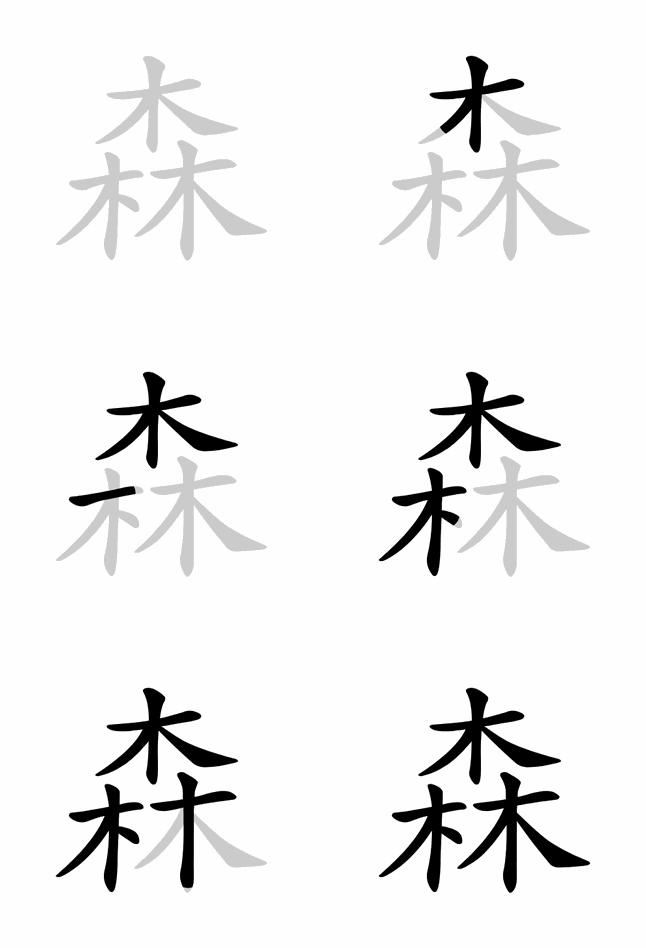
Kanji Stroke Order for 森
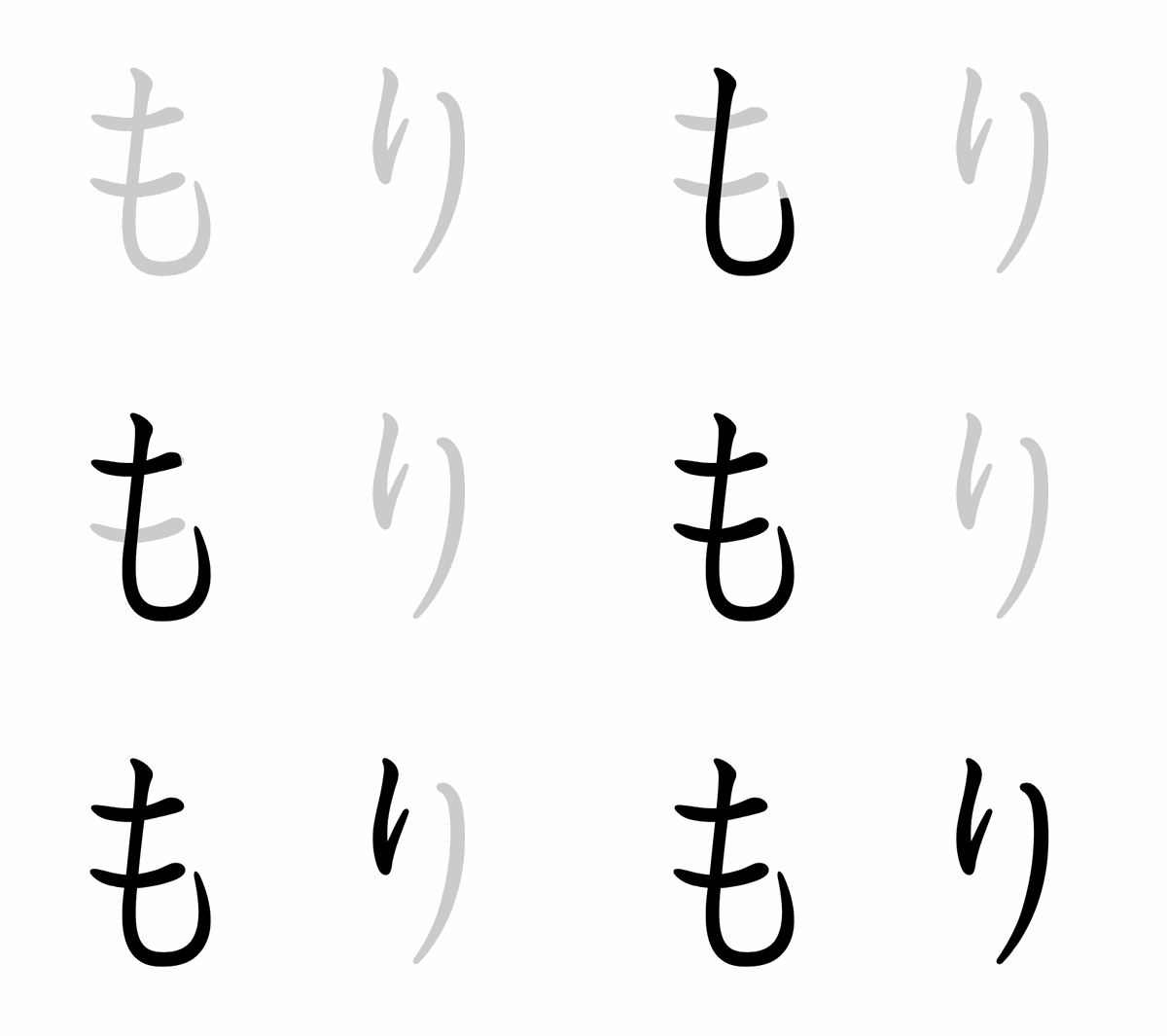
Hiragana Stroke Order: もり
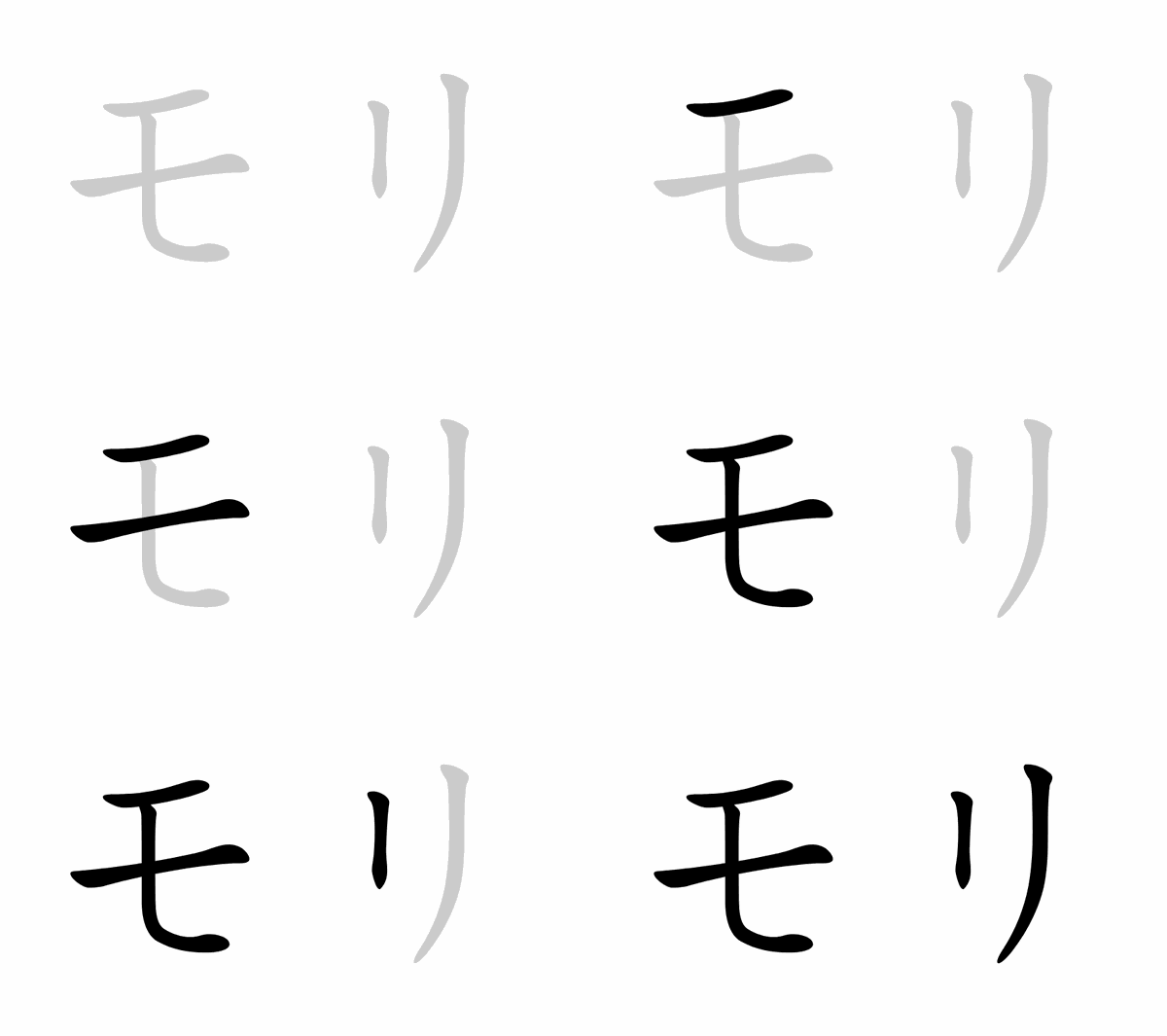
Katakana Stroke Order: モリ
Kanji, Hiragana, and Katakana Difference
The surname Mori can be shown in kanji, hiragana, or katakana. Each form has a different role.
- Kanji: 森 is the standard surname form. It carries the meaning “forest” or “woods.”
- Hiragana: もり shows the pronunciation in a soft phonetic script. It is useful for learners and reading support.
- Katakana: モリ also shows the pronunciation. It may be used for clarity, emphasis, or display purposes.
In normal name writing, 森 is the form learners are most likely to see.
Learning Note
Mori is a helpful surname for learners because the kanji is simple to remember: three trees together form a forest.
The reading is also straightforward: mo-ri. There are no long vowels and no unusual sound changes.
As with all Japanese names, it is still best to confirm a person’s preferred reading or spelling when accuracy matters, though 森 is very commonly read as Mori.
FAQ About Mori (森)
Is Mori a common Japanese surname?
Yes. Mori is a familiar Japanese surname and is widely recognized in Japan. Learners are likely to encounter this name in many contexts.
What is the origin of the Mori surname?
Mori is often explained as a place-name type surname connected with forests or woods. It may have referred to a family from a forested area or a place named Mori. The exact background can vary by family line, region, and historical records.
Are there different kanji spellings for Mori?
森 is the standard and most commonly seen kanji form for this surname. Other rare spellings may exist, so a person’s own written name should always be confirmed when accuracy matters.
Does the surname Mori have a long vowel?
No. The standard reading Mori does not contain a long vowel, so no macron is needed.
Want to turn your own name into Japanese?
Use our Japanese Name Converter to see how your first name can be written in Japanese katakana and creative kanji ideas with meanings.
Try the Japanese Name Converter
Creative kanji ideas are for inspiration only. Foreign names are usually written in katakana.