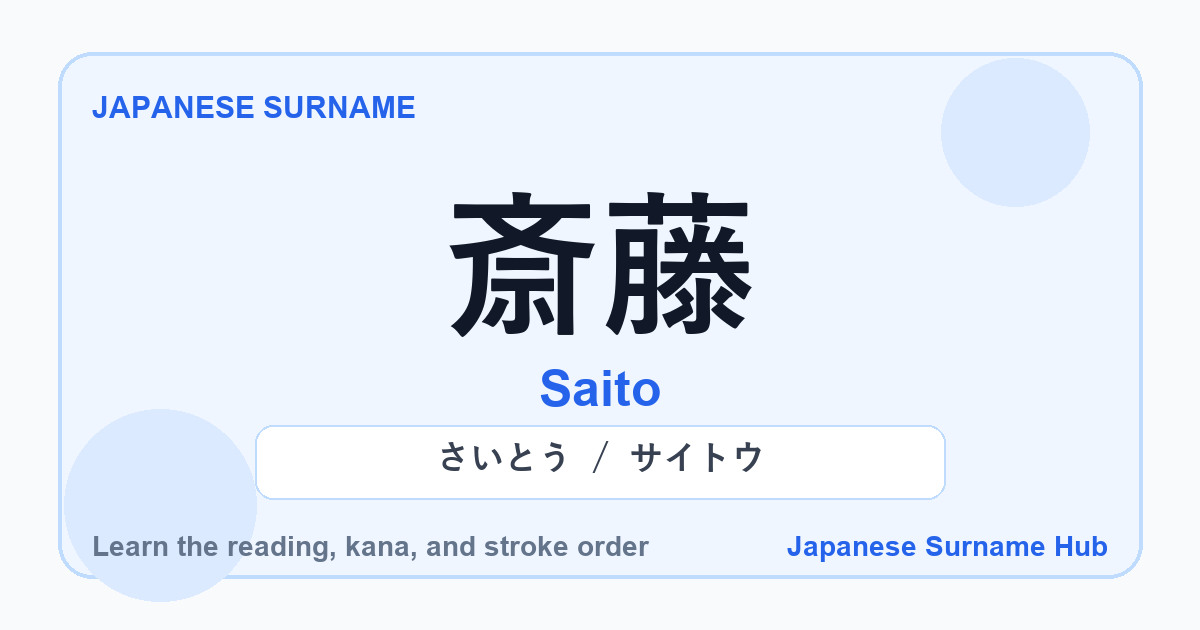
The Japanese surname Saito (斎藤) is a familiar name that learners may see in Japanese media, school materials, and everyday name examples. This article explains its kanji, reading, pronunciation, long vowel note, and basic meaning.
Quick Answer: Saito (斎藤)
| Surname | 斎藤 |
|---|---|
| Common Reading | Saito |
| Hiragana | さいとう |
| Katakana | サイトウ |
| Romaji | Saito, Saitō, or Saitou |
| Long Vowel Note | The とう part in さいとう is pronounced with a long “o” sound. |
What Does the Japanese Surname Saito (斎藤) Mean?
The surname Saito (斎藤) is written with two kanji: 斎 and 藤.
- 斎 (sai) can relate to purification, religious practice, or sacred settings.
- 藤 (tō) means wisteria and is a very common kanji in Japanese surnames.
A simple learner-friendly way to understand the kanji is “sacred / purification” plus “wisteria.” However, Japanese surnames should not always be interpreted as a direct modern phrase. The kanji give clues, but the exact family background can vary by region, historical records, and individual family line.
Some surnames containing 藤 are explained in connection with historical naming traditions, including Fujiwara-related explanations. Still, it is better not to assume one single origin story for every person named Saito.
Kanji Breakdown for Saito (斎藤)
| Kanji | Basic Meaning | Learning Note |
|---|---|---|
| 斎 | Purification, religious abstinence, sacred setting | This kanji can appear in words connected with ritual, ceremony, or purification. In a surname, it is best understood as a kanji element rather than a full sentence-like meaning. |
| 藤 | Wisteria | 藤 literally means wisteria. It is common in Japanese surnames such as 佐藤, 伊藤, 加藤, 後藤, and 遠藤. |
How to Read Saito (斎藤)
| Kanji | Hiragana | Katakana | Romaji | Reading Note |
|---|---|---|---|---|
| 斎藤 | さいとう | サイトウ | Saito / Saitō / Saitou | The とう in さいとう is pronounced as a long “o.” In romaji, this may be written as Saito, Saitō, or Saitou depending on style. |
Romaji and Pronunciation Notes
The surname 斎藤 is often written as Saito in everyday English. More pronunciation-focused romanizations include Saitō and Saitou.
- Saito: Common and easy to type, but it does not show the long vowel clearly.
- Saitō: Uses a macron to show the long “o” sound.
- Saitou: Shows the hiragana spelling さいとう more directly.
For pronunciation, think of it as Sai-tō, with the final “o” held slightly longer than a short vowel. There are no other long vowels in this reading.
When writing someone’s name in romaji, follow that person’s preferred spelling whenever possible.
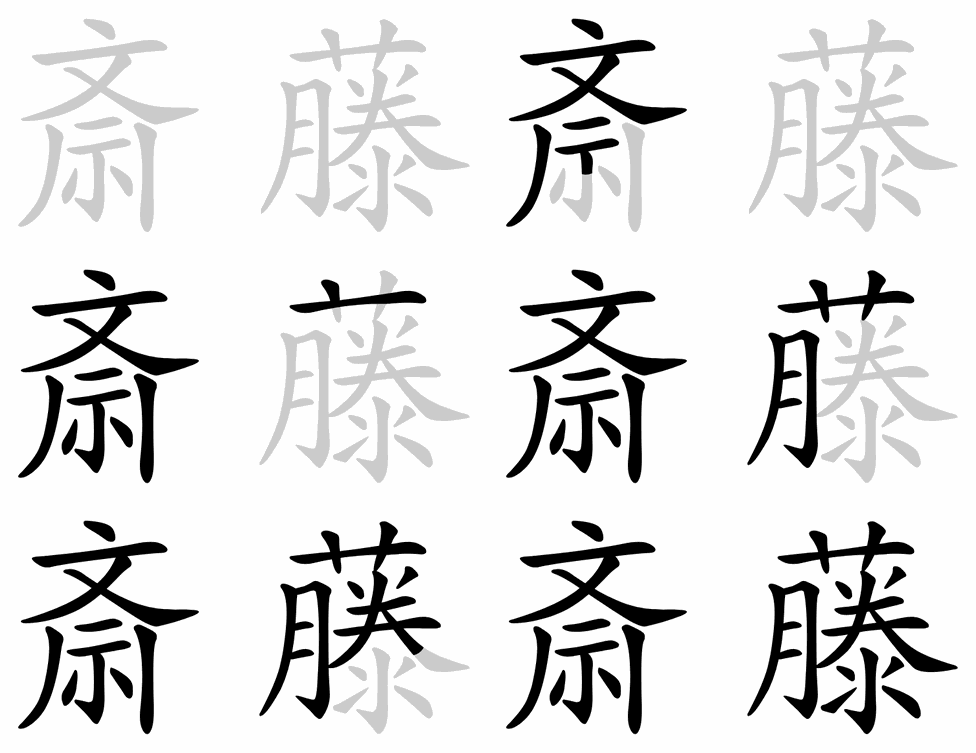
Kanji Stroke Order for 斎藤 (Saito)
Stroke order helps with recognition and writing practice.
斎藤
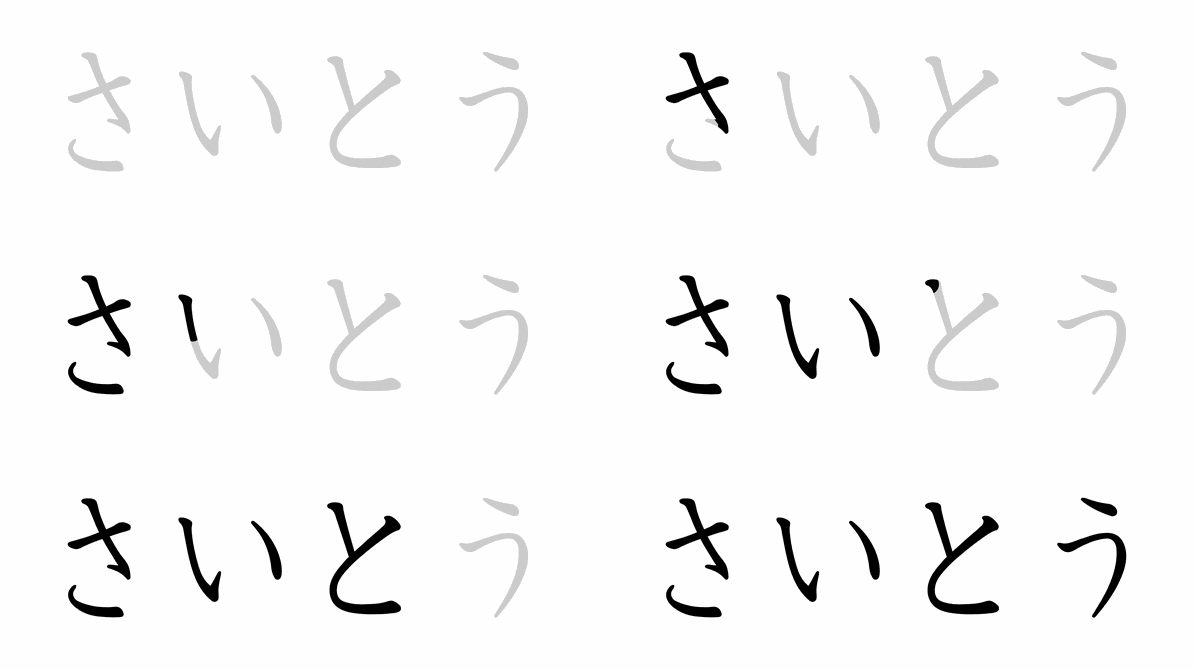
Hiragana Stroke Order for さいとう (Saito)
Hiragana shows the pronunciation of the surname.
さいとう
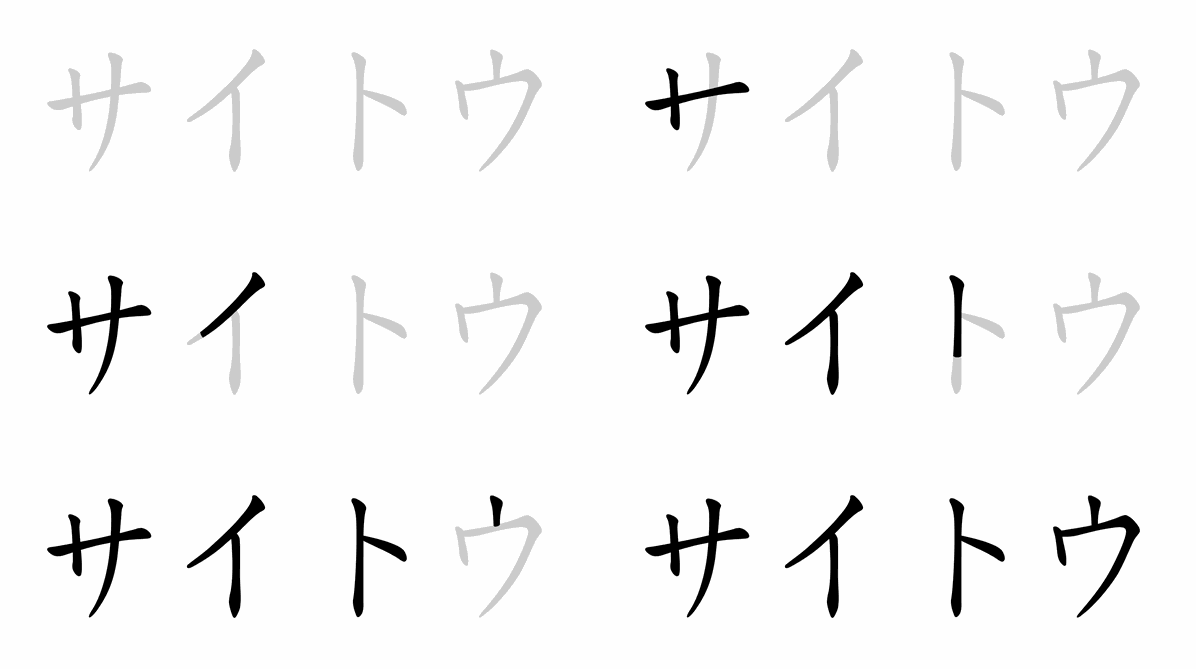
Katakana Stroke Order for サイトウ (Saito)
Katakana can also be used to show the pronunciation of Japanese names.
サイトウ
Kanji, Hiragana, and Katakana Difference
The surname Saito can be shown in kanji, hiragana, or katakana. Each script has a different role.
- Kanji: 斎藤 is the standard surname form. It carries meaning and is used in normal name writing.
- Hiragana: さいとう shows the pronunciation in a soft phonetic script. It is useful for learners and reading support.
- Katakana: サイトウ also shows the pronunciation. It may be used for clarity, emphasis, or display purposes.
For official and everyday name writing, 斎藤 is the form learners are most likely to see.
Learning Note
Saito is useful for learners because it includes the common surname kanji 藤. This kanji appears in many Japanese family names, including Satō, Itō, Katō, Gotō, and Endō.
The most important pronunciation point is the long “o” sound at the end. Although many people write the name as Saito in English, the hiragana さいとう shows that the final vowel is long.
As with all Japanese names, the exact written form and preferred romanization should be confirmed when accuracy matters.
FAQ About Saito (斎藤)
Is Saito a common Japanese surname?
Yes. Saito is a familiar and widely recognized Japanese surname. Japanese learners are likely to encounter it in names, media, and everyday examples.
Why is Saito sometimes written as Saitō or Saitou?
The hiragana さいとう contains とう, which is pronounced as a long “o” sound. Saitō marks this with a macron, while Saitou shows the spelling more directly. Saito is a common simplified spelling.
What does the kanji 藤 mean in Saito?
藤 means wisteria. It is a very common kanji in Japanese surnames and appears in many well-known names.
Are there other kanji spellings for Saito?
Yes. Saito can be written with several kanji variants, such as 斎藤, 齋藤, 齊藤, and others. 斎藤 is a common simplified form, but a person’s own written form should always be confirmed.
Want to turn your own name into Japanese?
Use our Japanese Name Converter to see how your first name can be written in Japanese katakana and creative kanji ideas with meanings.
Try the Japanese Name Converter
Creative kanji ideas are for inspiration only. Foreign names are usually written in katakana.