What Does “Gakkuri (がっくり)” Mean?
👉 To suddenly slump, drop, or collapse due to loss of physical strength or energy.
👉 To suddenly feel deeply disappointed, dejected, or disheartened; to have one's spirits sink.
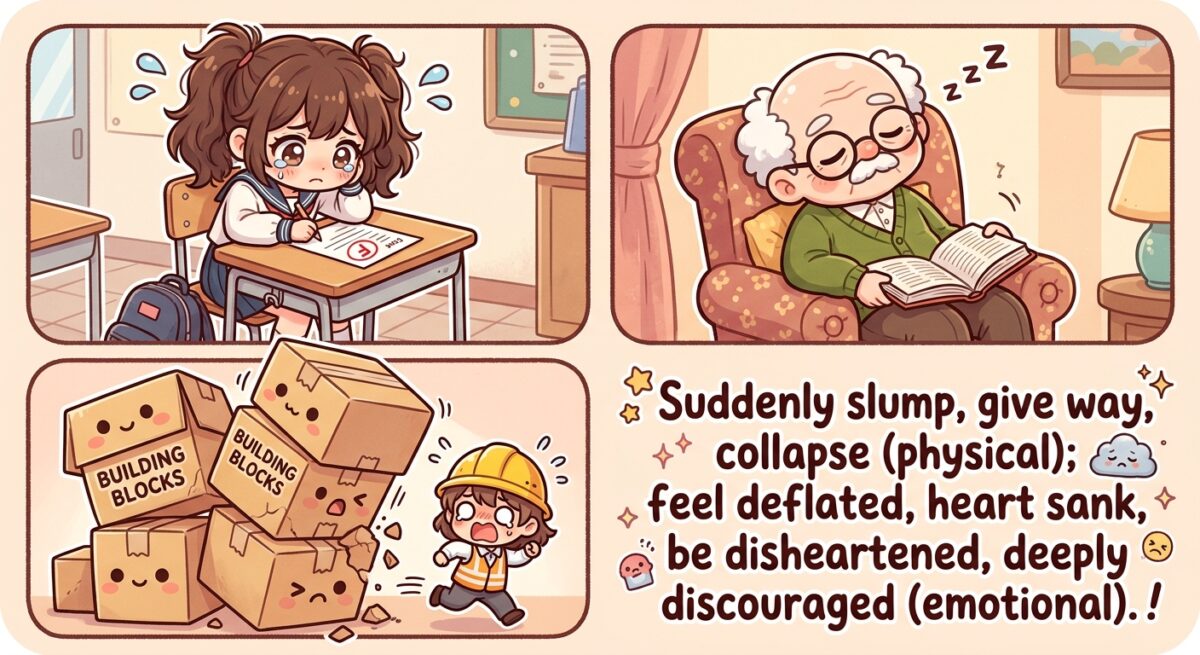
Nuance & Depth
Describes a sudden, distinct, and often heavy movement of giving way, either physically (e.g., a head dropping, shoulders slumping) or emotionally (e.g., one's hope or motivation collapsing). It implies a significant and abrupt loss of vigor, often accompanied by a sense of defeat or profound sadness.
Gakkuri vs Suddenly slump, give way, collapse (physical); feel deflated, heart sank, be disheartened, deeply discouraged (emotional).: An adverbial onomatopoeia often used with 'と' (to) as がっくりと to describe the manner of an action, or with 'する' (suru) as がっくりする (to slump, to be disheartened). The 'がっ' sound suggests a heavy, sudden impact or yielding, while 'くり' indicates a quick, conclusive action.
Imagine This Situation
Example Sentences & Audio
(His efforts went unrewarded, and he suddenly slumped his shoulders GAKKURI (がっくり, suddenly slumped).)
(Upon hearing the project cancellation, the entire team was deeply disheartened GAKKURI (がっくり, deeply disheartened).)
(Overcome by sleepiness, his head suddenly dropped GAKKURI (がっくり, suddenly dropped) onto the desk.)
Summary
👉 がっくり describes a sudden, significant slump, either physically (dropping, collapsing) or emotionally (deep disappointment, dejection), conveying an abrupt loss of vigor or hope.