What Does “Gushagusha (ぐしゃぐしゃ)” Mean?
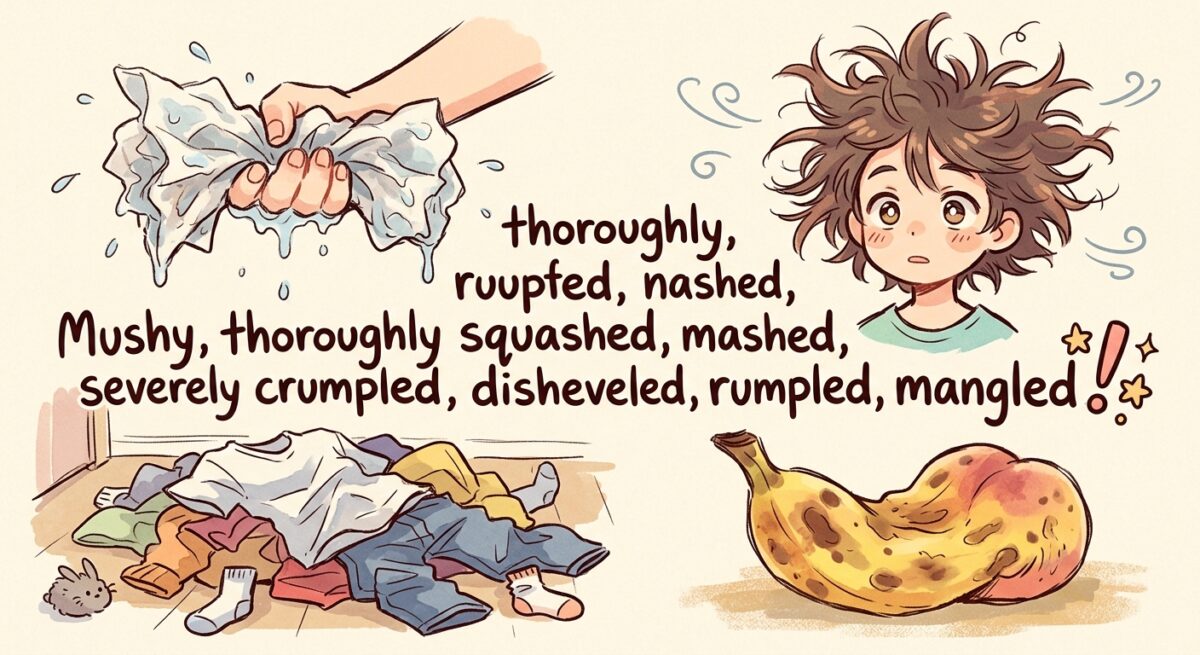
👉 Thoroughly squashed, mashed, or crumpled (implying a soft, wet, or easily deformed material that has completely lost its original shape or integrity).
👉 Disheveled, rumpled, or unkempt (referring specifically to the appearance of hair or clothes that are in extreme physical disorder).
Nuance & Depth
Implies a state of being completely and thoroughly messed up, flattened, or distorted, often from pressure, impact, or neglect. It conveys a strong sense of disarray, often accompanied by a loss of firmness or original structure, suggesting a soft, pliable, or even wet quality to the object. The deformation is usually severe.
Gushagusha vs Mushy, thoroughly squashed, mashed, severely crumpled, disheveled, rumpled, mangled.: Describes both the visual state and the tactile sensation of something being thoroughly squashed, mashed, or in extreme disarray. It emphasizes the complete lack of order and a state of ruin or untidiness, often carrying a slightly negative connotation and strongly implying the action that caused such a state.
Imagine This Situation
Example Sentences & Audio
(The paper became GUSHAGUSHA (ぐしゃぐしゃ, thoroughly crumpled and wet) from the rain.)
(Her hair was GUSHAGUSHA (ぐしゃぐしゃ, disheveled and messy) from bed head.)
(I found a strawberry that was GUSHAGUSHA (ぐしゃぐしゃ, completely mashed and squashed).)
Summary
👉 'ぐしゃぐしゃ' vividly describes a state of being thoroughly squashed, mashed, or disheveled, typically with a nuance of softness, wetness, or a complete and severe loss of original shape and neatness due to pressure or neglect.