What Does “Harebottai (はれぼったい)” Mean?
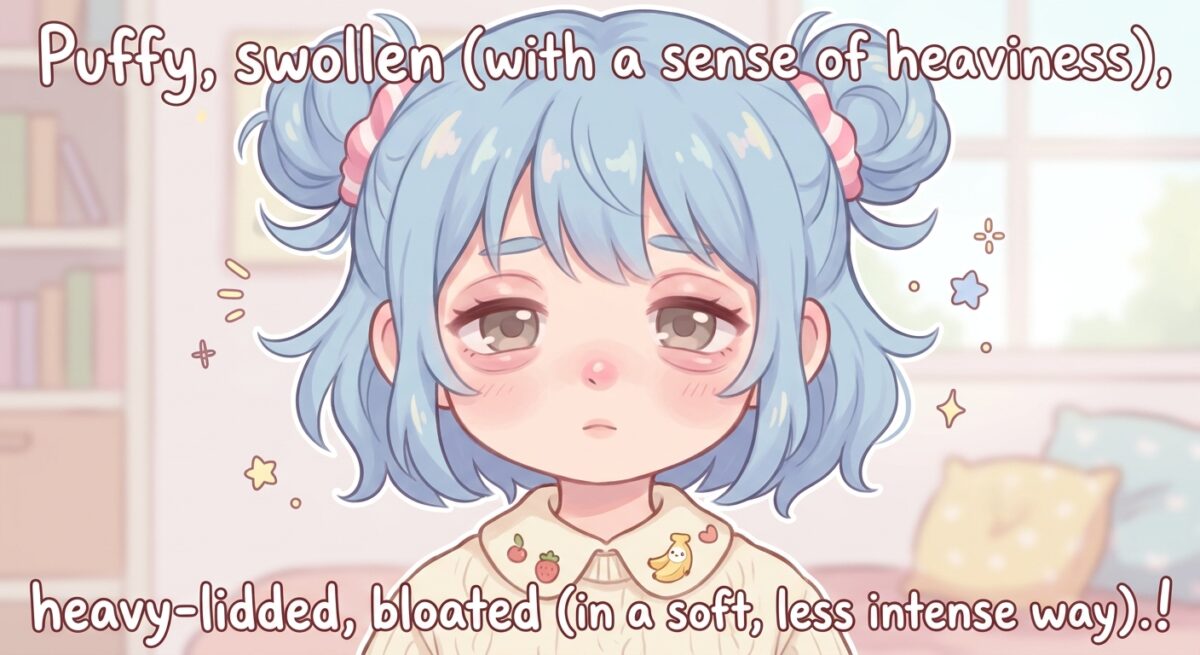
👉 Puffy, swollen (especially eyes or face), giving a heavy or thick sensation.
👉 Describes a soft, somewhat heavy, and often slightly uncomfortable swelling.
Nuance & Depth
It conveys a sensation of being gently but noticeably swollen, often accompanied by a feeling of heaviness or slight dullness. This swelling is typically soft to the touch, not firm or hard, and is commonly associated with fatigue, crying, or mild irritation rather than severe inflammation or injury. It can also imply a slightly unattractive or tired appearance.
Harebottai vs Puffy, swollen (with a sense of heaviness), heavy-lidded, bloated (in a soft, less intense way).: The word is formed from 'はれ' (hare), meaning 'swelling' or 'a swollen state,' combined with 'ぼったい' (bottai), an adjectival suffix that conveys a sense of being thick, heavy, or clumsy. Thus, 'はれぼったい' describes a swelling that feels heavy, thick, or cumbersome, particularly when referring to parts of the face like eyes or eyelids.
Imagine This Situation
Example Sentences & Audio
(When I woke up in the morning, my eyes were puffy(はれぼったい, swollen and heavy-looking).)
(My eyelids are puffy(はれぼったい, swollen and heavy) from crying too much.)
(I feel like my whole face is puffy(はれぼったい, swollen and heavy) due to lack of sleep.)
Summary
👉 'はれぼったい' is an adjective describing a soft, heavy, and often slightly uncomfortable swelling, most commonly seen in the eyes or face due to factors like crying, fatigue, or mild irritation, implying a less-than-refreshed appearance.