If you are thinking about a Japanese tattoo for “respect,” the word 尊敬 (sonkei) may seem like the most direct choice. It does mean “respect,” but as a tattoo, it can feel more formal and less personal than many people expect.
This guide explains what 尊敬 means, how natural it sounds in Japanese, and whether it works well as a standalone tattoo from a Japanese perspective.
Quick Answer: Is 尊敬 (sonkei) a Good Japanese Tattoo?
尊敬 (sonkei) is correct Japanese and clearly means “respect.” However, as a standalone tattoo, it may feel a little formal, abstract, or dictionary-like. It is not offensive, but it may not be the most personal or natural choice for body art.
How This Word Looks in Japanese
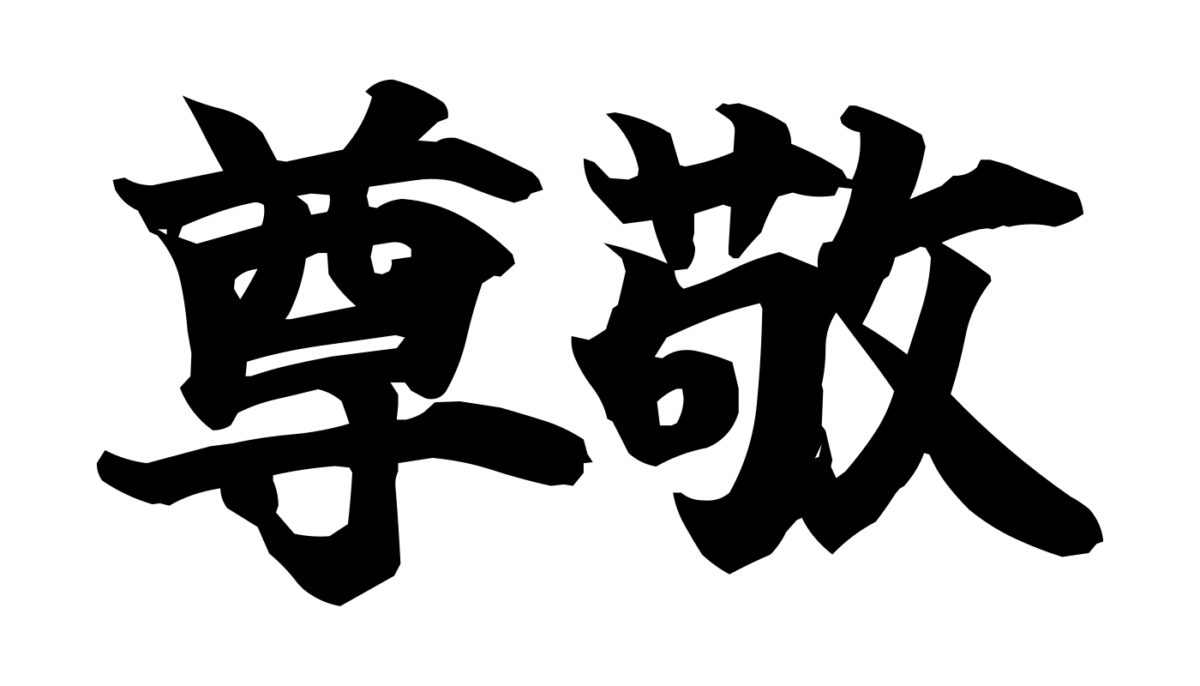
Meaning of 尊敬 (sonkei)
尊敬 (sonkei) means “respect,” “esteem,” or “admiration.” It is used when you hold someone in high regard because of their character, achievements, knowledge, position, or way of life.
The kanji 尊 carries the idea of preciousness, honor, or reverence. 敬 means respect or courtesy. Together, they form a standard Japanese word for respectful admiration.
How Natural Does 尊敬 (sonkei) Sound?
As a Japanese word, 尊敬 is completely natural. You may see it in sentences such as 尊敬しています, meaning “I respect you” or “I admire you.”
As a tattoo, however, the feeling is different. A single word like 尊敬 can look formal and abstract, almost like a value written in a textbook. Some Japanese speakers may understand the meaning immediately but still feel that it is not very personal as body art.
Tattoo Suitability of 尊敬 (sonkei)
尊敬 is not a bad word for a tattoo, but it is not the strongest choice if you want something personal, emotional, or visually symbolic. It clearly communicates “respect,” yet it may not show who or what you respect.
If your tattoo is meant to express respect for family, ancestors, teachers, a mentor, or a personal value, a more specific phrase may feel warmer and more meaningful.
Cultural Nuance of 尊敬 (sonkei)
In Japanese, 尊敬 is often used when speaking about people you admire: a teacher, parent, senior, leader, artist, athlete, or historical figure. It is respectful and positive, but it is also somewhat formal.
That formality is why it can feel a little stiff as a standalone tattoo. The word itself is fine, but the tattoo may read as “Respect” as a general idea rather than a personal story.
Other Options for a “Respect” Tattoo
If you want a tattoo about respect, first decide what kind of respect you mean. Respect for family, self-respect, gratitude, honor, humility, and admiration can lead to different Japanese choices.
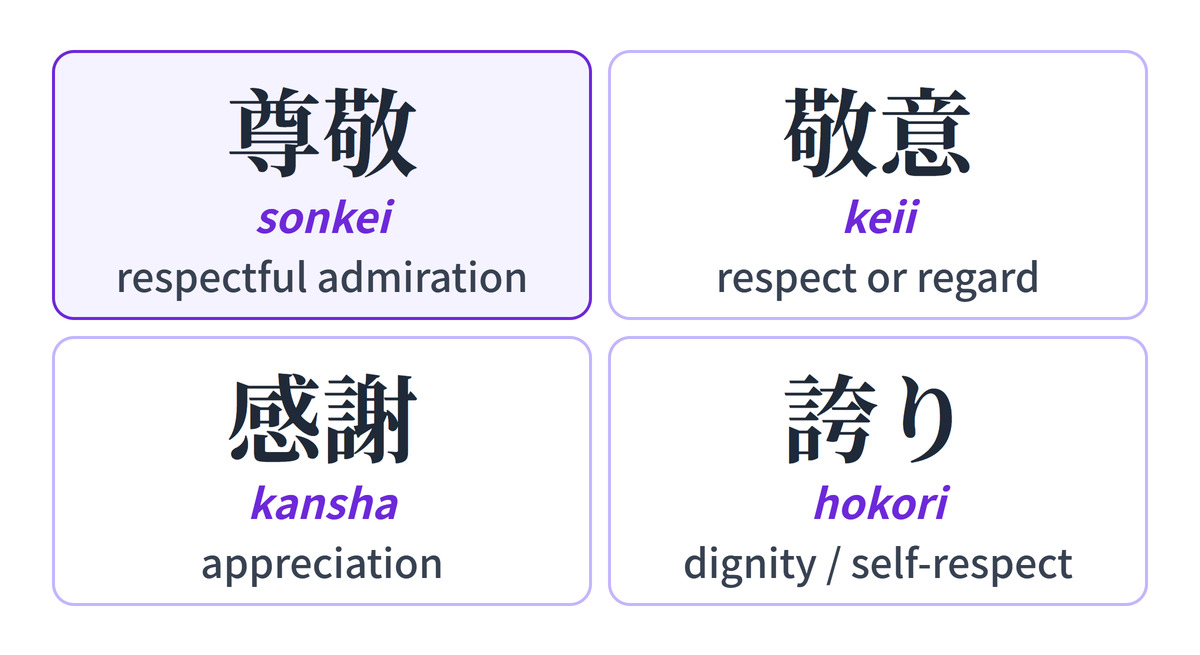
For example, 感謝 (kansha, gratitude) may feel more personal if your idea is appreciation. 敬意 (keii, respect or regard) can sound formal but is another related option. 誇り (hokori, pride) may fit if the meaning is about dignity or self-respect.
Before choosing a permanent tattoo, it is best to confirm the exact phrase with a trusted native Japanese speaker and a tattoo artist who understands Japanese lettering.
Ready to Check Your Japanese Tattoo Idea?
Don't leave your tattoo to chance. Our Japanese Tattoo Checker gives an automated, AI-assisted first check of the meaning and naturalness of your chosen kanji or phrase.
Frequently Asked Questions
Key Takeaway for Your “Respect” Tattoo
尊敬 (sonkei) correctly means “respect,” but it may feel formal and general as a tattoo. If you want a more personal design, consider a phrase or kanji that expresses the specific kind of respect you mean.
Related guides
This article is for educational guidance only. Before choosing a permanent tattoo, confirm the exact wording, nuance, and visual design with a trusted native Japanese speaker or professional tattoo artist.